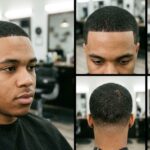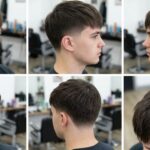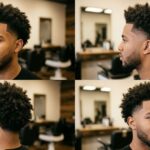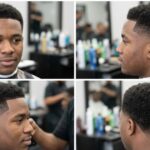
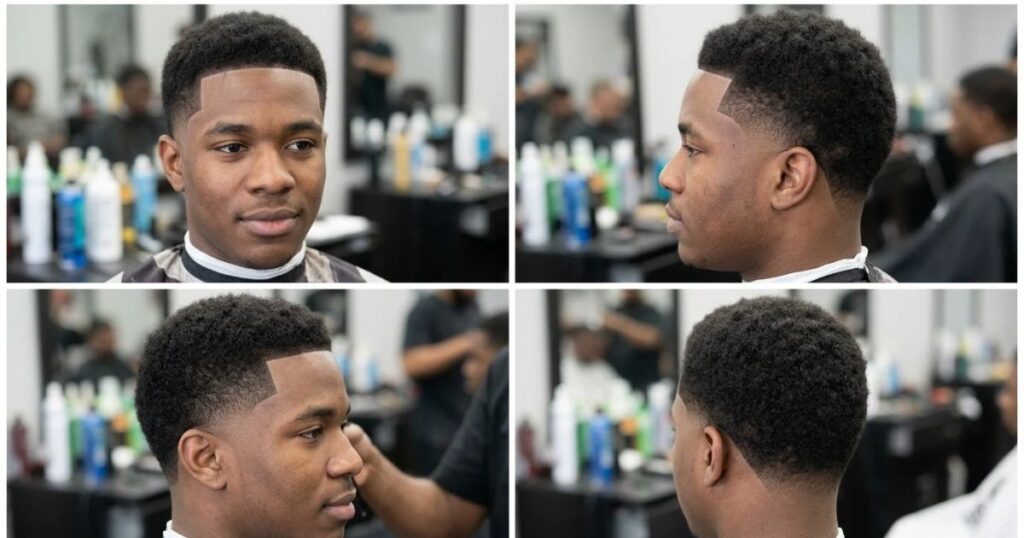
A high taper fade shortens the hair quickly around the temples, sideburns, and nape, then blends upward into a longer top. It looks sharp, keeps the sides fuller than a full high fade, and works on almost every hair type. The catch is that barbers use the name differently.
This guide explains how the cut is built, how it compares with high fades and lower tapers, and who it suits. You will also get a copyable barber script, upkeep advice, and safety notes, so you can confidently walk into the chair knowing exactly what to ask for.
What is a high taper fade?
A high taper fade is a haircut where the hair gets shorter in a gradual blend that starts high on the head, around the temples and sideburns, and finishes at the nape. The top stays longer, and the sides usually keep more weight than they would in a full high fade.
The word “high” describes where the blend starts. It does not tell you how short the hair gets at the bottom. That is a separate choice: bare skin, a zero-guard finish, a short guard length, or a soft shadow.
Cut anatomy: fade zone, blend, and retained length
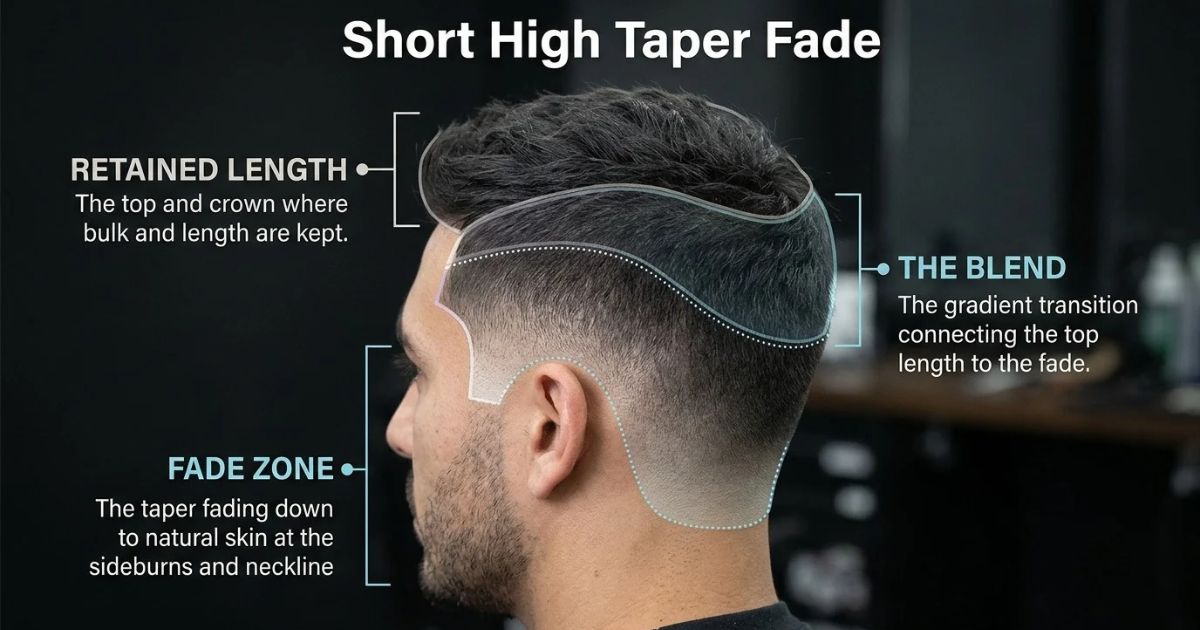
Every high taper fade has three parts. Knowing them helps you describe exactly what you want.
| Part | What it is | What to decide |
| Fade zone | The shortest area, usually temples, sideburns, and nape | Skin, zero, or shadow finish |
| Blend | The smooth gradient between the shortest hair and the longer hair above it | Soft and gradual, or tighter and more defined |
| Retained length | The weight left on the upper sides and top, usually above the widest part of the head (the parietal ridge) | How full the sides stay, and how long the top is |
Barbers build the gradient with clipper guards, a clipper lever, and scissors or clipper-over-comb work. Because the cut is a gradient, no single guard length should show as a hard line.
Read More:Cristiano Ronaldo Net Worth 2026: How He Built His $1.2 Billion Fortune
Terminology: why the name varies between barbers
There is no official rulebook for fade names. One barber may use “high taper fade” for a small, tidy taper at the temples and neck. Another may use it for a fade that rises close to the crown, which many others would call a high fade or a temple fade.
Menus add to the confusion. Many shops list only “fade” or “taper.” The safest approach is to describe the result, not the label. Agree on how much of the side gets faded, how high the blend starts, and how short the shortest point goes.
High taper fade vs high fade, low taper, and mid taper
Four things separate these cuts: how much of the side is faded, where the blend starts, how much weight remains, and how much scalp shows. Heights are relative to your own head, not a fixed measurement.
| Feature | High taper fade | High fade | Mid taper | Low taper |
| Where the blend starts | High, but localized | High and broad | Around the temples | Just above the ear and neckline |
| Side weight kept | More than a high fade | Least | Moderate | Most |
| Contrast | High | Highest | Medium | Subtle |
| Scalp showing | Moderate (finish-dependent) | Most | Low to moderate | Least |
| Grow-out visibility | Noticeable | Most noticeable | Moderate | Least noticeable |
| Best for | Sharp look with fuller sides | Boldest look | Balanced, versatile look | Conservative, low-key look |
Quick rule: pick a high taper fade for strong contrast without losing all side fullness. Pick a high fade for maximum boldness. Pick a mid or low taper for a softer look and fewer barber visits.
What are the main benefits of a high taper fade?
The main benefit of a high taper fade is sharp definition around the face and neck while the sides keep some texture. It also adapts to almost any top style.
- Clean, sharp contrast around the temples, ears, and nape.
- Fuller sides than a full high fade, so the head shape looks balanced.
- Flexible finish: skin, zero, guard, or shadow.
- Works with many tops: crop, curls, afro, quiff, pompadour, buzz cut, locs, or braids.
- Beard-friendly: the sideburn can blend smoothly into a beard.
- Easy daily routine when the top is short.
The trade-off is upkeep. High contrast shows regrowth sooner, so you will need more frequent visits than with a low taper.
Who does a high taper fade suit?
A high taper fade suits most men and boys, because the height, finish, and top length can all be adjusted. Hair texture, growth pattern, and upkeep tolerance matter more than face shape alone.
Hair texture, density, and growth pattern
- Straight hair: shows the blend clearly, so a softer transition usually looks cleaner.
- Wavy hair: adds natural movement on top with little effort.
- Curly and coily hair: holds the cut well, but shrinkage means barbers often go a guard longer.
- Thick or dark hair: shows a stronger gradient.
- Fine or light hair: gives a softer, more see-through blend.
- Cowlicks and crown swirls: tell your barber about them first, since they affect how evenly the blend sits.
Face, head shape, hairline, and scalp visibility
Face shape is a starting point, not a rule. A barber should also look at head contour, hairline shape, scars, and any thinning.
- Round or square faces: a high taper adds definition and lift.
- Long faces: keep the top fuller and the taper slightly lower to avoid adding height.
- Receding or uneven hairlines: ask for a softer front edge instead of a sharp line-up.
- Scars or pigmentation near the temples: a shadow finish shows less scalp than bare skin.
Lifestyle and upkeep tolerance
Ask yourself three questions before booking:
- Can I visit a barber every two to three weeks?
- How much time can I spend styling the top each morning?
- Does my workplace or school have grooming rules?
If the answer to the first question is no, choose a shadow finish or a lower taper.
Which high taper fade style fits your hair?
Choose the top style by your hair texture, density, and how much time you want to spend styling. The taper stays the same, while the top changes the whole look.
High taper fade styles for curly and coily hair
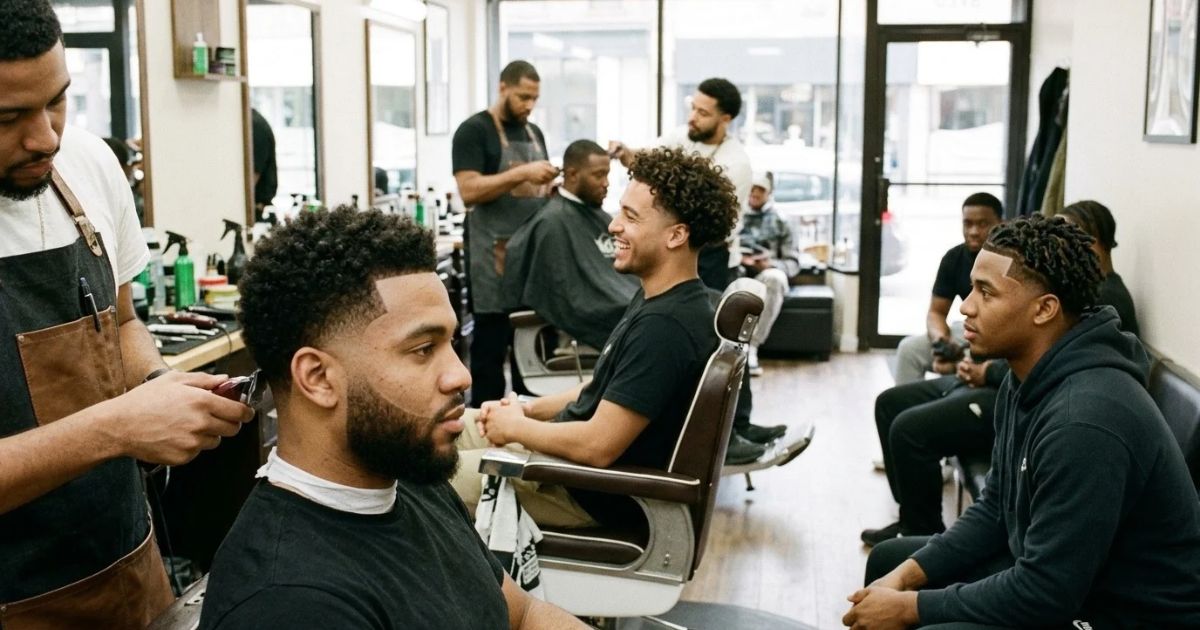
The taper frames the perimeter while the top shows off the curl or coil pattern.
Rounded afro or defined curly top
A rounded shape needs fairly even length across the crown. Ask for a shape-up at the edges instead of heavy thinning, which can flatten volume. Define curls with a leave-in or curl cream on damp hair.
Twists, locs, or braids with a high taper
The taper only trims the perimeter, so your parts and foundation stay intact. Confirm how close the clippers should come to the part lines, and match the temple and nape heights so both sides look even.
High taper fade styles for straight and wavy hair
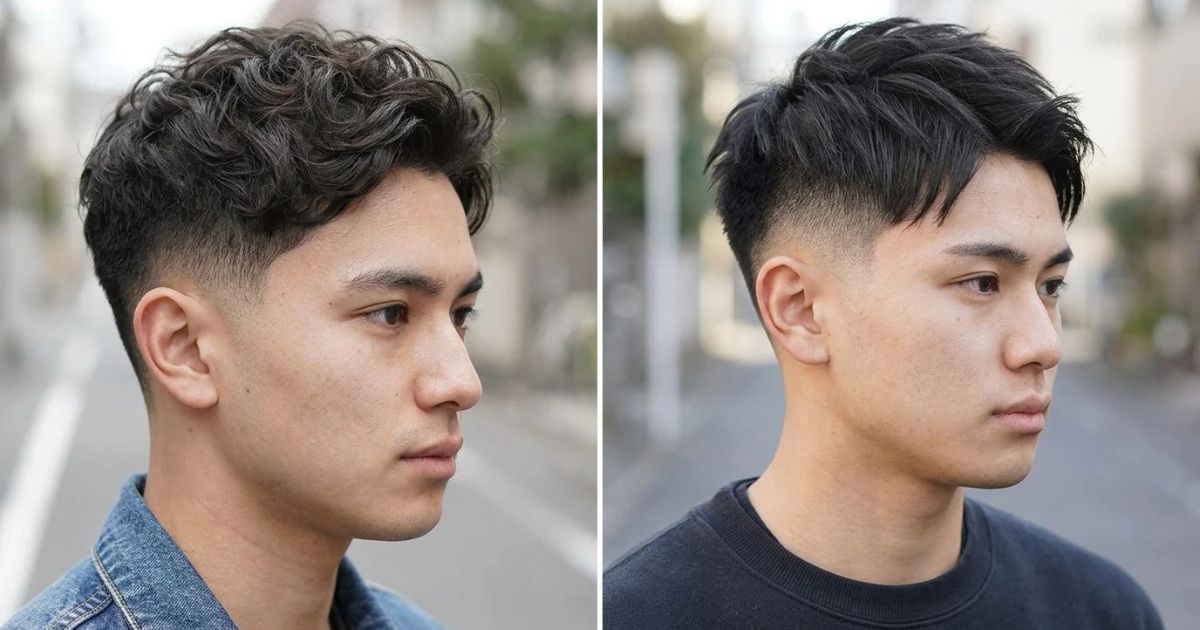
Textured crop or forward fringe
A short, choppy top with a forward fringe pairs well with a high taper. Use matte clay or paste to keep the texture separated. With a short top, a softer blend looks more natural than a hard one.
Side part, quiff, or pompadour
These styles need a couple of inches of length on top so you can comb, part, or lift. Blow-dry against the part direction for root lift, then use a medium-hold pomade or cream.
Short high taper fade options with less daily styling
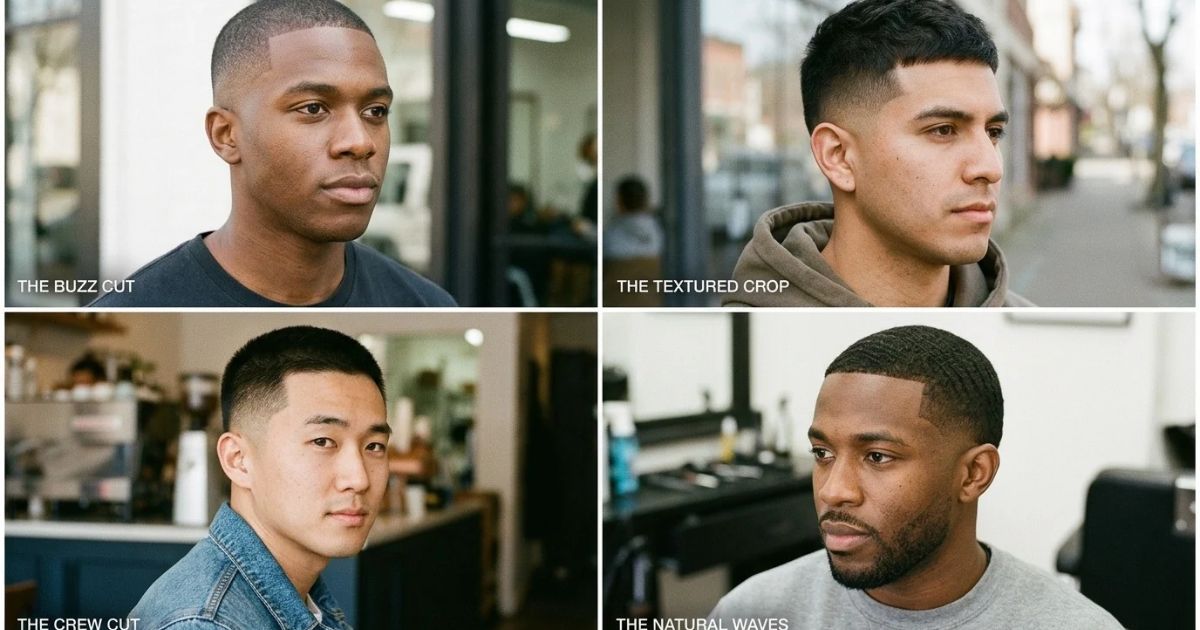
A shorter top saves styling time, but the fade still needs regular refreshing.
Buzz cut or crew cut
A buzz cut keeps the top and sides close in length, with the taper adding contrast at the temples and nape. A crew cut leaves a little more on top, often brushed forward. Both finish with a towel-dry.
Short textured top
A slightly longer top, cut with scissors or clipper-over-comb, adds definition without a part. A pea-sized amount of matte paste on damp hair is usually enough.
Beard and neckline pairings
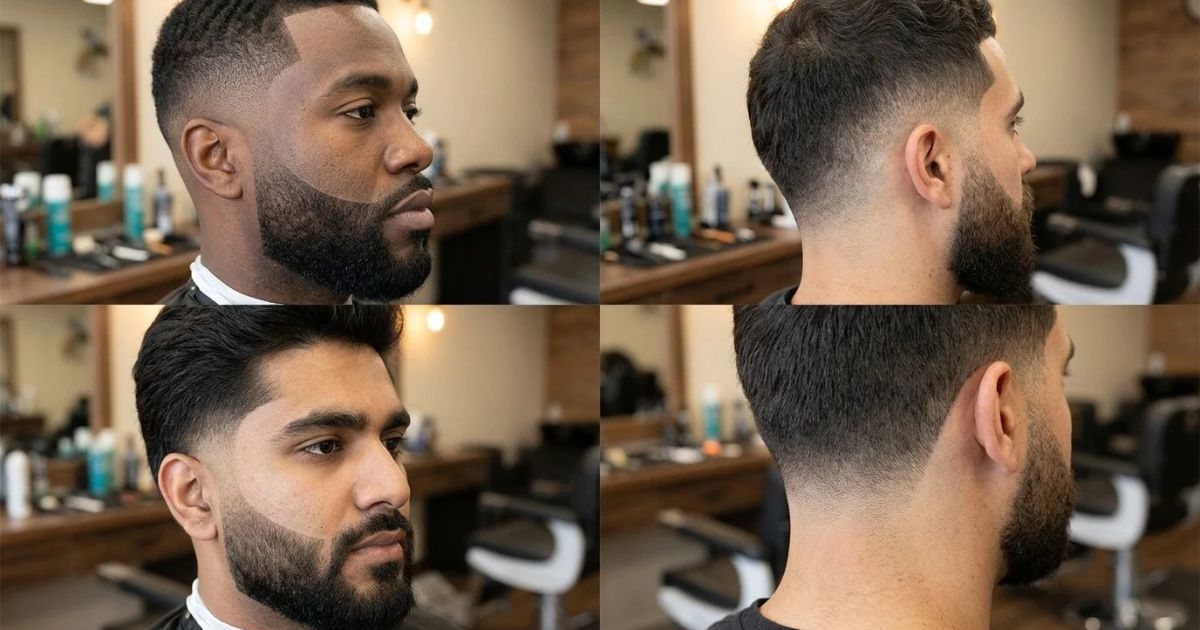
Temple-to-beard blend
A good blend runs from the temple taper through the sideburn and into the beard with no visible gap. Barbers usually use the same guard or one guard longer in the sideburn, then clean the cheek line separately.
Tapered nape versus defined neckline
| Option | Look | Upkeep |
| Tapered nape | Soft, blends into the neck | Grows out more gently |
| Defined neckline | Sharp, squared or rounded edge | Shows regrowth sooner |
How do you ask a barber for a high taper fade?
Do not rely on the name alone. Describe the coverage, height, shortest length, top, and neckline, and bring photos. This removes guesswork and avoids a cut that is higher or shorter than you wanted.
Seven haircut specifications to agree on
- Fade coverage: only the temples and nape, or most of the side and back.
- Transition height: where the blend starts, relative to your temples and ears.
- Shortest length: skin, zero, or a guard number.
- Top length and shape: crop, curls, quiff, afro, locs, or buzz.
- Hairline: natural edge, light cleanup, or sharp line-up.
- Sideburns and neckline: kept, tapered, pointed, or removed; tapered or defined nape.
- Beard connection: a gradual blend or a clean separation.
Use this guard chart to name an exact length:
| Guard | Approx. length (inches) | Approx. length (mm) |
| #1/2 | 1/16 | 1.5 |
| #1 | 1/8 | 3 |
| #2 | 1/4 | 6 |
| #3 | 3/8 | 10 |
| #4 | 1/2 | 13 |
Reference-photo checklist
- Front, side, and back views
- Similar hair texture and density to yours
- Similar top length
- Clear view of the temples and neckline
- No heavy filters or shadows hiding the blend
- A note on what you like and dislike in each photo
Copyable barber script
“I’d like a high taper fade, with the blend starting high around my temples and the nape. Please keep the weight on the upper sides. I want the shortest point to be [skin / zero / a #1 / a shadow]. Leave the top at [length and style]. I’d like a [natural / sharp] hairline and a [tapered / defined] neckline. Here are three photos. Please adapt the cut to my head and hair growth.”
Your pre-appointment checklist
- Save three reference photos
- Choose the shortest length
- Choose the top length and style
- Pick a neckline and beard connection
- Mention sensitive skin, scars, cowlicks, or thinning
- Ask how your barber defines “high taper fade” before they start
How do you maintain and style a high taper fade?
Daily care depends on your top style. Visit frequency depends on how fast your hair grows and how close the finish is.
Refresh schedule and grow-out
Scalp hair grows roughly half an inch a month, according to MedlinePlus. That is about an eighth of an inch a week, so a skin finish looks like a #1 within about a week. Growth varies from person to person, so treat these as guides, not guarantees.
| Finish | Typical refresh window | Why |
| Skin or zero | Every 2 weeks | Regrowth shows quickly |
| Shadow or short guard | Every 2 to 3 weeks | Softer contrast hides growth |
| Longer guard or lower taper | Every 3 to 4 weeks | Little contrast to lose |
The edges usually look grown out before the blend does. If only the neck and temples have softened, ask for an edge trim instead of a full reblend.
Daily styling by hair texture
| Hair type | Daily routine |
| Curly or coily | Leave-in or curl cream on damp hair, then shape with fingers or a pick |
| Wavy | Light cream or sea salt spray, air-dry or diffuse |
| Straight | Blow-dry first, then pomade or paste for hold |
| Short textured | Matte paste on damp hair, kept away from the fade zone |
Safe between-visit cleanup
- Trim only stray hairs along the neckline and hairline edge.
- Do not try to raise or reshape the fade line yourself.
- Use clean, dry tools.
- Stop at the first sign of irritation.
- Leave full reblends to your barber.
What are the drawbacks and safety considerations?
The drawbacks are mostly practical. A few involve skin comfort and hygiene, and none rule the cut out.
Practical drawbacks and edge cases
- Faster visible regrowth than lower tapers.
- Less side fullness if the blend is taken too high.
- More scalp exposure, including scars, pigmentation, or thinning.
- Uneven blends around cowlicks near the temples.
- Dress codes: some schools and workplaces limit high-contrast styles.
- Name confusion, which can lead to a higher or shorter cut than expected.
Irritation, razor bumps, and barber-tool hygiene
Very short coarse or curly hair can curl back into the skin and cause razor bumps (pseudofolliculitis). The American Academy of Dermatology advises less close cutting for bump-prone skin. A shadow finish instead of bare skin is a sensible option.
Bumps that keep returning on the back of the neck or scalp deserve a dermatologist’s opinion. Some conditions, such as acne keloidalis nuchae, can look similar and may scar if untreated.
Hygiene matters too. Good barbers brush debris off clippers and disinfect them between clients, with rules varying by state and country. Before you sit down, check that the station looks clean and the tools are cleaned between customers.
What are the best alternatives to a high taper fade?
If the contrast or upkeep does not suit you, a neighboring cut may give you what you actually want.
| If you want… | Try this |
| More side weight, less contrast | Low taper fade |
| A middle ground | Mid taper fade |
| Softer grow-out, no skin | Classic taper |
| Maximum contrast | High fade |
| A blend that curves behind the ear | Drop fade |
| Contrast around the ear only | Burst fade |
| Bare-scalp sides | Skin (bald) fade |
High taper fade FAQs
Is a high taper fade the same as a high fade?
Not exactly. A high taper fade stays localized and keeps more side weight, while a high fade covers more of the side. Some barbers use the names interchangeably, so describe coverage.
Does a high taper fade have to go down to skin?
No. The shortest point can be skin, zero, a guard length, or a shadow. Choose a shadow finish if your skin is sensitive.
How often should I refresh a high taper fade?
Most people book every two to three weeks. A skin finish needs visits sooner than a shadow or guard finish.
What guard number should I ask for?
A #1 (1/8 inch) or #2 (1/4 inch) is common at the shortest point. Describe the look too, since height and length are separate choices.
Is a high taper fade good for curly hair?
Yes. The taper frames a curly or coily top well. Ask your barber to allow for shrinkage when choosing guard lengths.
Can a high taper fade work with thinning or receding hair?
Yes, with adjustments. A lower blend, softer hairline, and shadow finish can reduce visible scalp.
Can I cut a high taper fade at home?
It is difficult. Even blending and symmetry are hard to see on yourself. Stick to neckline cleanup between barber visits.
Can I get a high taper fade with a beard?
Yes. Ask for the sideburn to blend into the beard, or for a clean separation if you prefer a sharper look.
Conclusion
A high taper fade comes down to three choices: how much of the side you fade, how short the shortest point goes, and what stays on top. Settle those before you sit down, and the cut becomes predictable every time, whatever name your barber uses for it.
Bring three reference photos, agree on the finish, and book a refresh before the blend fully softens. If your skin is bump-prone, choose a shadow finish over bare skin. Use the script and checklist above, then ask for a quick neckline trim when the edges drift.