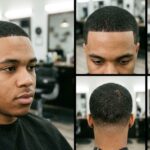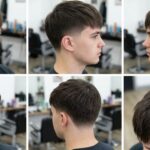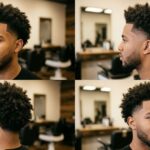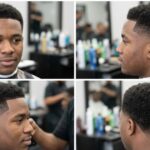
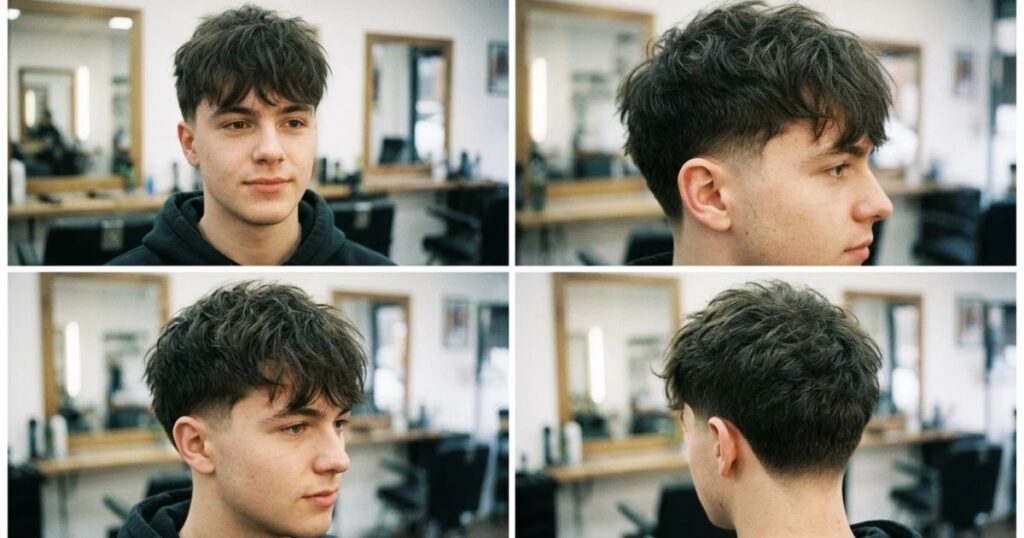
The low taper fringe has become one of the most requested men’s cuts because it solves a simple problem. You get tidy, softly blended sides without losing the length on top. The fringe adds movement, frames the face, and keeps the look relaxed rather than overly sharp.
This guide covers 20 fringe and crop styles, ideal hair lengths, face-shape matches, barber wording, home styling, products, upkeep, and costs. Use it as a shortlist before your next appointment. Pick a version that fits your hair texture and daily routine, then bring clear references so your barber gets it right.
What is a low taper fade fringe?
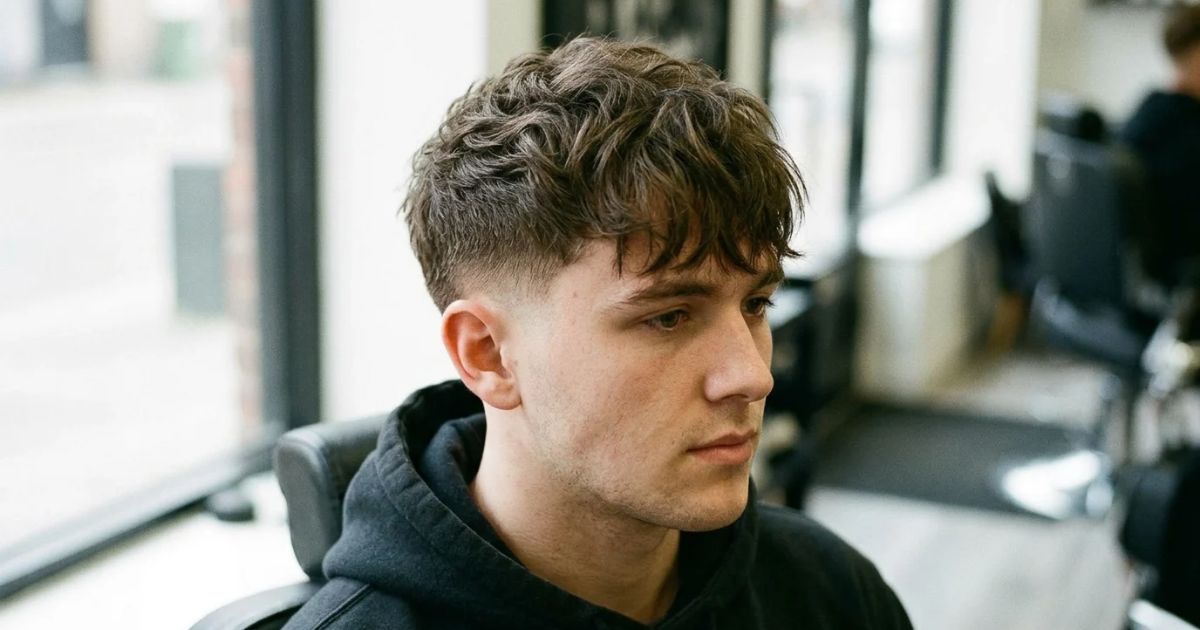
A low taper fade fringe is a short-back-and-sides cut with a longer top that falls forward over the forehead. The sides shorten gradually, but only around the sideburns, the area above the ears, and the neckline. The rest of the sides keep some length.
Because the blend starts low, the contrast is gentle. That is why the cut grows out cleanly and looks neat in an office as easily as on a campus.
Quick definition: a low taper fade fringe combines a subtle low blend at the edges with a forward-styled, usually textured, front section.
Key parts of the cut:
- Taper: the gradual shortening of hair at the sideburns and nape
- Low fade point: where the blend ends, just above the ear
- Fringe: the front hair, usually brow length
- Top section: the hair that supplies texture and movement
What it looks like from the front, side, and back
Each angle shows a different part of the cut. Checking all three helps you judge a reference photo properly.
| Angle | What you should see |
| Front | A fringe resting at or just above the brows, broken into soft pieces rather than one flat curtain |
| Side | Short hair at the sideburn that lengthens smoothly toward the crown, with no hard line or “shelf” |
| Back | A clean, slightly rounded neckline with a tapered nape instead of a boxy block edge |
Most inspiration photos show only the front. Ask your barber to confirm the side and back plan before the clippers come out.
How it compares to similar cuts
Many fringe cuts share a name or a silhouette, so it pays to know the real differences. The sides and the front edge are what separate them.
| Cut | Side blend | Front shape | Maintenance |
| Low taper fade fringe | Soft, low, close to the hairline | Textured, forward, brow length | Moderate |
| Mid taper fringe | Starts higher, more visible contrast | Similar fringe, heavier look | Moderate to high |
| High fade fringe | Strong contrast, scalp shows | Fringe stands out sharply | High |
| French crop | Usually tighter sides | Short, straight, blunt-ish | Low |
| Blowout taper | Taper supports a bigger shape | Volume lifted up and out | High |
In short, the low taper gives the softest transition. If you want more drama, go higher. If you want less styling, shorten the fringe.
Who does it suit?
This cut suits most men because it adapts to the hair you already have. It works for teens, students, office workers, and men in their forties and beyond.
It suits:
- Straight hair: a short, point-cut fringe gives neat texture
- Wavy hair: natural movement does most of the styling work
- Curly and coily hair: extra length on top gives the curls room to form
- Thick hair: the low blend keeps weight under control without a hard fade
- Receding or high hairlines: a fringe adds coverage over the forehead
Take more care if you have very fine hair or a strong cowlick at the front. A shorter, lighter fringe usually behaves better in both cases.
Best fringe for your face shape
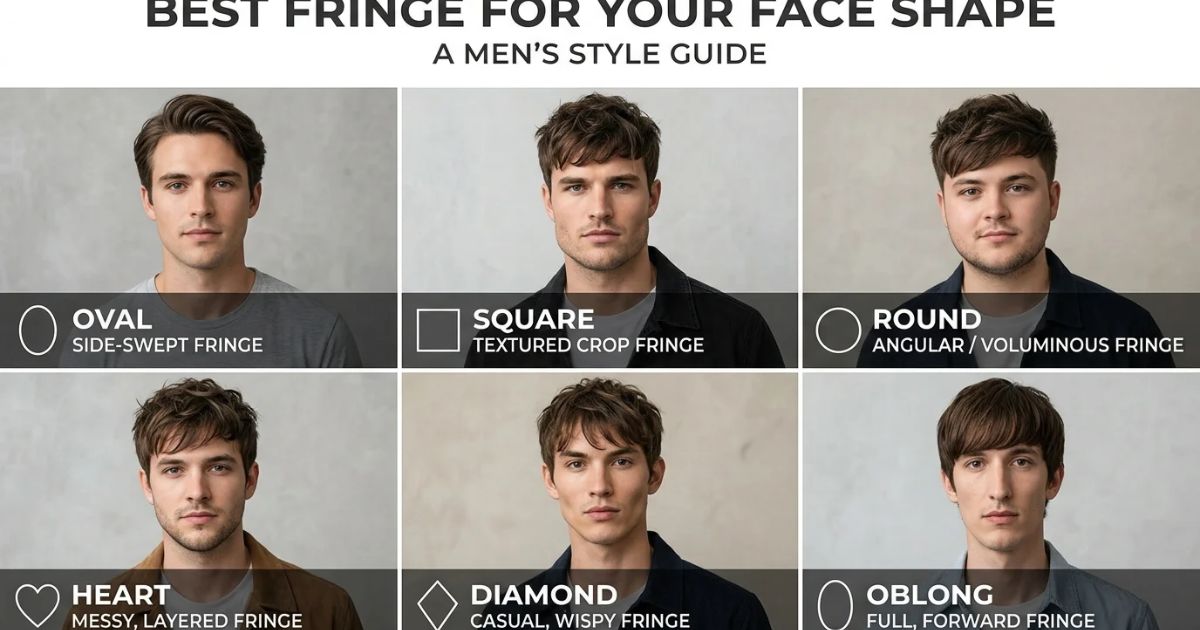
Face shape is a guide, not a rule. Still, a few matches are reliable.
| Face shape | Best fringe style | Why it works |
| Oval | Almost any length or weight | Proportions are already balanced |
| Round | Textured fringe with some lift | Adds height and length |
| Square | Messy or uneven fringe | Softens a strong jawline |
| Heart | Side-swept or light fringe | Balances a wider forehead |
| Diamond | Fuller, wavy or curtain fringe | Softens prominent cheekbones |
| Oblong | Fuller, forward fringe | Shortens the look of the face |
Read More:Low Taper Fade Mullet: Styles, Hair Types, Face Shapes, and Upkeep 2026
20 best low taper fade fringe styles
Pick two or three that suit your hair, then show them to your barber. Add your own photos beside each style for the best on-page experience.
| # | Style | Best for | Ideal top length |
| 1 | Classic textured fringe | Most hair types | 2–3 in |
| 2 | Messy fringe | Thick or wavy hair | 2.5–3.5 in |
| 3 | Short brushed-forward fringe | Straight, low-effort routines | 1.5–2 in |
| 4 | Long swept fringe | Thick hair, forehead coverage | 3–4 in |
| 5 | Curtain fringe | Straight or wavy hair | 3–4 in |
| 6 | Side-swept fringe | Heart or oval faces | 2.5–3.5 in |
| 7 | French crop | Fine or straight hair | 1.5–2 in |
| 8 | Blunt Edgar-style fringe | Dense straight hair | 1.5–2.5 in |
| 9 | Fluffy fringe | Wavy or thick hair | 3–4 in |
| 10 | Curly fringe | Type 3 curls | 3–4 in (pre-shrinkage) |
| 11 | Wavy fringe | Loose waves | 2.5–3.5 in |
| 12 | Coily fringe | Type 4 hair | 2–3 in |
| 13 | Fine-hair fringe | Thin strands | 1.5–2.5 in |
| 14 | Thick-hair fringe | Dense hair | 2–3 in, debulked |
| 15 | Choppy straight fringe | Straight hair needing texture | 2–3 in |
| 16 | Skin taper with fringe | Sharper contrast | 2–3 in |
| 17 | Soft-parted fringe | Office-ready looks | 2.5–3.5 in |
| 18 | Pushed-forward spiky fringe | Short, textured styling | 1.5–2.5 in |
| 19 | Fringe with a short beard | Square or round faces | 2–3 in |
| 20 | Natural undone fringe | Minimal styling | 2–3 in |
How long should your hair be?
Length decides how much your barber can do. Cutting too short removes your options, so start longer and trim later.
| Fringe type | Top length | Daily effort |
| Short, neat | 1.5–2 in (4–5 cm) | Very low |
| Textured, layered | 2–3 in (5–7.5 cm) | Low to moderate |
| Fluffy or blowout | 3–4 in (7.5–10 cm) | Moderate to high |
Curly and coily hair springs up as it dries, so leave extra length. Hair may also shrink by an inch or more once it dries, depending on the curl pattern.
In the barber’s chair: what to ask for and what to expect
Clear wording matters more than guard numbers. Try something like this:
“Low taper blended around the sideburns and neckline, soft sides, and a textured fringe about two to three inches long, styled forward.”
What to bring:
- Two or three photos showing hair like yours
- A note on your usual part and any cowlicks
- A clear idea of how much time you will spend styling
What to expect:
- The barber checks density, growth direction, and cowlicks.
- The sides and nape are tapered low.
- The fringe is cut and point-cut for texture.
- The hairline is cleaned up and the style is finished with light product.
If the barber suggests thinning, ask for light texturizing first. Heavy thinning can leave fine hair looking patchy.
How to style it at home
A good routine takes about five minutes. Keep the steps simple.
- Start damp: towel-dry hair so it is not dripping.
- Prep: add heat protectant or a light pre-styler.
- Direct: push the fringe forward with your fingers while blow-drying.
- Add lift (optional): use a round brush for fluffy or blowout versions.
- Finish: rub a pea-sized amount of clay or powder between your palms and work it through the ends.
Curly hair does better with a diffuser on low heat and a curl cream. Straight hair needs less product. In every case, use less than you think you need.
Best products
Choose your product by hair type and the finish you want.
| Product | Best for | Finish |
| Sea salt spray | Straight, wavy | Light, grainy texture |
| Texture powder | Fine, thin hair | Lift and matte grip |
| Matte clay | Thick, messy styles | Strong hold, no shine |
| Styling cream | Straight, soft looks | Natural, flexible |
| Curl cream | Curly, coily | Definition, less frizz |
| Heat protectant | Anyone using a dryer | Protects from damage |
Heavy gels and waxes tend to flatten a fringe, so skip them unless your hair is very thick.
Maintenance and upkeep
A low taper usually looks fresh for three to five weeks. Skin-level versions need attention sooner because regrowth shows more clearly.
| Task | How often |
| Neckline and sideburn cleanup | Every 2–3 weeks |
| Full taper refresh | Every 3–5 weeks |
| Fringe trim | When it reaches your eyes |
| Deep cleanse (remove product buildup) | Weekly |
Do not try to rebuild the fade at home. A blend is difficult to repair once it goes wrong, and regrowth is easier to fix than a bad cut.
Common mistakes to avoid
- Letting the fade creep high: it stops being a soft low taper
- Cutting the fringe too short: it takes weeks to recover
- Over-thinning fine hair: the front looks sparse
- Using too much product: hair turns greasy and loses movement
- Ignoring a cowlick: the fringe will fight you every morning
- Choosing a blowout without a dryer: the shape will not hold
- Using only one reference photo: the sides and back stay a guess
Pros and cons
What works
- Suits straight, wavy, curly, and coily hair
- Softer than a mid or high fade
- Works in casual and professional settings
- Many fringe lengths and shapes to choose from
- Grows out neatly
- Covers a high forehead or receding temples
What to consider
- Longer versions need a blow dryer
- The fringe may need a trim before the sides
- Fine hair can look flat without light product
- A weak blend shows quickly as it grows
- It is not a zero-styling cut at longer lengths
How much does it cost?
Prices vary by city, barber experience, and whether styling is included. The figures below are rough guides, so check your local barber’s menu.
| Service | Typical range (USD) |
| Standard low taper fade fringe | 25–55 |
| Skin taper or detailed scissor work | 35–70 |
| Add-ons (beard trim, line-up, wash) | 5–20 |
A fringe takes more time than a basic cut because of the blending and point cutting. Look at the barber’s portfolio for similar work, and ask what the price includes before you sit down.
Frequently asked questions
Is a low taper fade fringe high maintenance?
No, a short natural version needs little daily effort. Fluffy or blowout versions need a dryer and more frequent visits.
How long should the top be for a textured fringe?
Aim for about 2–3 inches (5–7.5 cm). This gives your barber enough hair for point cutting and movement.
Can I get it with curly hair?
Yes, leave extra length for shrinkage and use curl cream for definition. A diffuser on low heat helps control frizz.
Does it work for thin or fine hair?
Yes, choose a shorter, lighter fringe. Texture powder adds grip without weighing the hair down.
What is the difference between a taper and a fade?
A taper shortens hair gently, mostly at the sideburns and nape. A fade usually blends down to skin or very short length with more contrast.
How often should I get it cut?
Every three to five weeks keeps the taper fresh. Trim the fringe sooner if it reaches your eyes.
What product is best for a messy fringe?
A sea salt spray or a little matte clay works best. Both add texture without making the hair stiff.
Can I wear it without a blow dryer?
Yes, shorter or natural versions air-dry well with light product. Fluffy and blowout styles do need heat.
Conclusion
The low taper fade fringe works because it balances order and ease. The sides stay neat, the neckline looks clean, and the top keeps its natural movement. Choose your fringe length around your hair texture, density, and face shape, and keep the taper low for the softest result.
Before booking, save a few photos that match your hair type, decide how much styling time you really have, and ask your barber to start longer on top so nothing goes too short. Refresh the taper every three to five weeks, and the cut will keep looking deliberate.