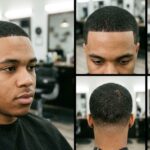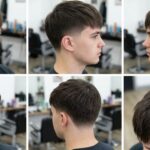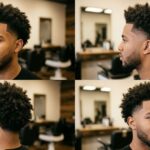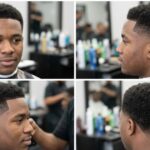
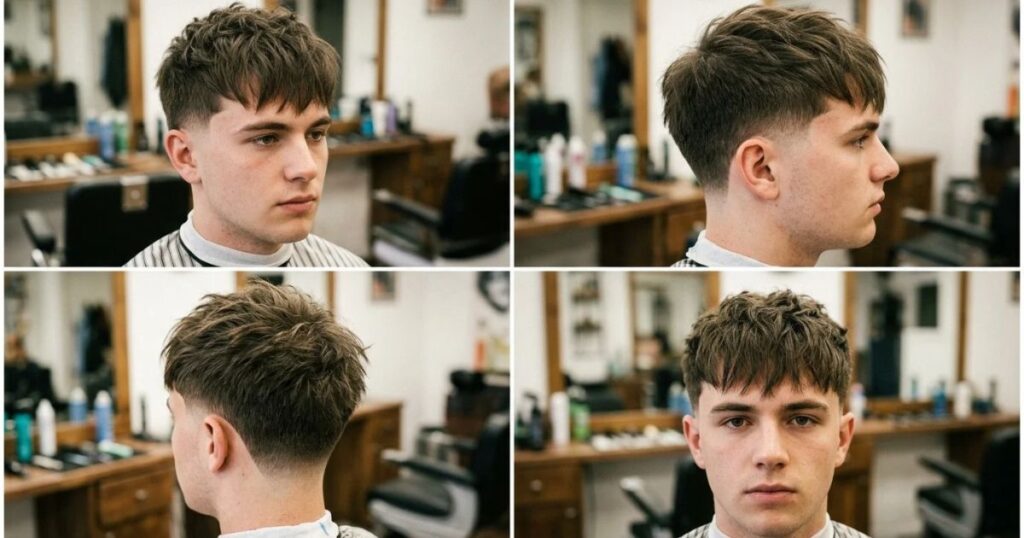
A textured fringe with low taper fade gives you loose, movement-rich hair on top and tidy, softly graded sides. It looks styled without looking staged, which is why barbers hear this request every day. It works for school, the office, and weekends, and it asks for very little effort each morning.
This guide explains what the cut is, who it suits, and how to describe it clearly to your barber. You’ll also find face shape and hair type advice, home styling steps, product picks, trim timing, and common mistakes, so you can leave the chair with the cut you pictured.
What a textured fringe with low taper fade actually is
In short: a textured fringe with low taper fade is a men’s haircut with choppy, forward-falling hair on top. The sides and back shorten gradually, starting low near the ears and neckline.
It has two parts that work together.
- The textured fringe: The front section of the top falls toward the forehead. Barbers cut it with point cutting, a razor, or texturizing shears so the ends look uneven and airy instead of flat and heavy.
- The low taper fade: The hair around the sideburns, ears, and nape gets shorter in small steps. Because the blend begins low, the contrast stays soft.
| Part of the cut | Typical length | What it does |
| Fringe (front) | 3–6 cm | Falls forward with movement |
| Top (crown) | 4–7 cm | Adds body and shape |
| Sides | Tapered, short to skin | Keeps the profile clean |
| Neckline | Tapered or squared | Finishes the look |
Taper vs. fade: A taper shortens hair gradually and usually leaves some length at the edges. A fade goes down to the skin. Many barbers combine them, so say clearly which finish you want.
Read More:Low Taper Fade Fringe: 20 Best Fringe & Crop Hairstyles for Men (2026)
Why the cut is everywhere in 2026
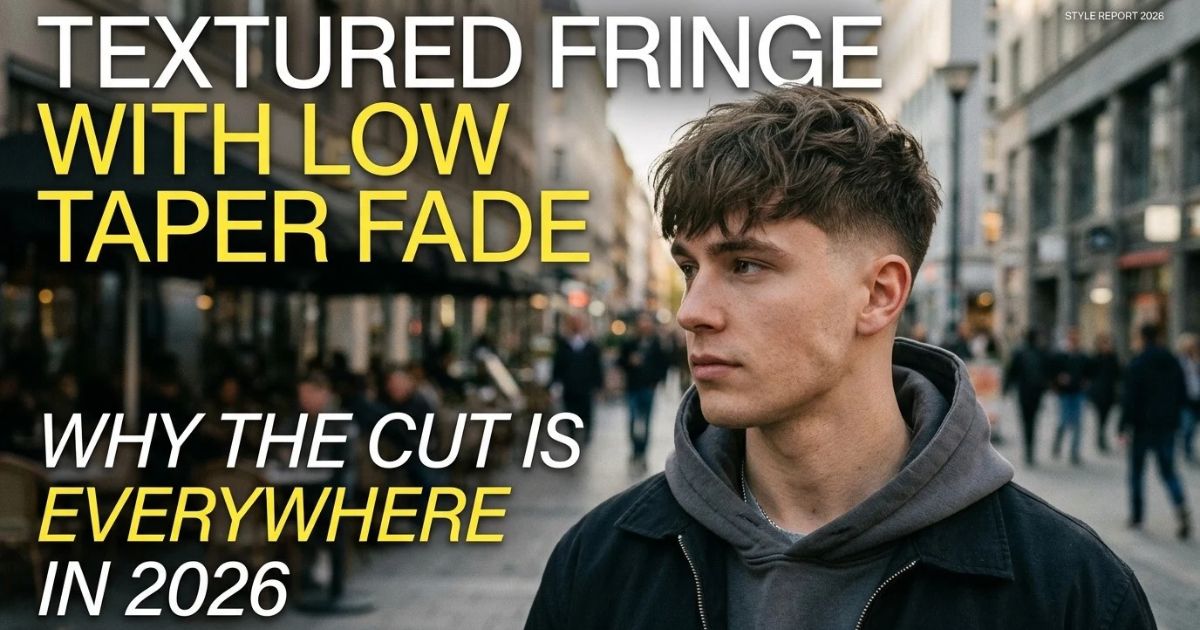
Men’s grooming has moved away from glossy, product-heavy styles. People now want hair that looks natural, matte, and a little undone. This cut fits that shift well.
Here is why it keeps showing up in barbershops and on social feeds:
- It looks polished and relaxed at once. The tidy sides keep it professional.
- It grows out well. A low taper softens over time instead of looking suddenly overgrown.
- It’s quick to style. Most men need under two minutes.
- It’s easy to personalize. Fringe length, texture, and fade finish can all change.
- It photographs well. The movement on top reads clearly in photos.
Who it suits
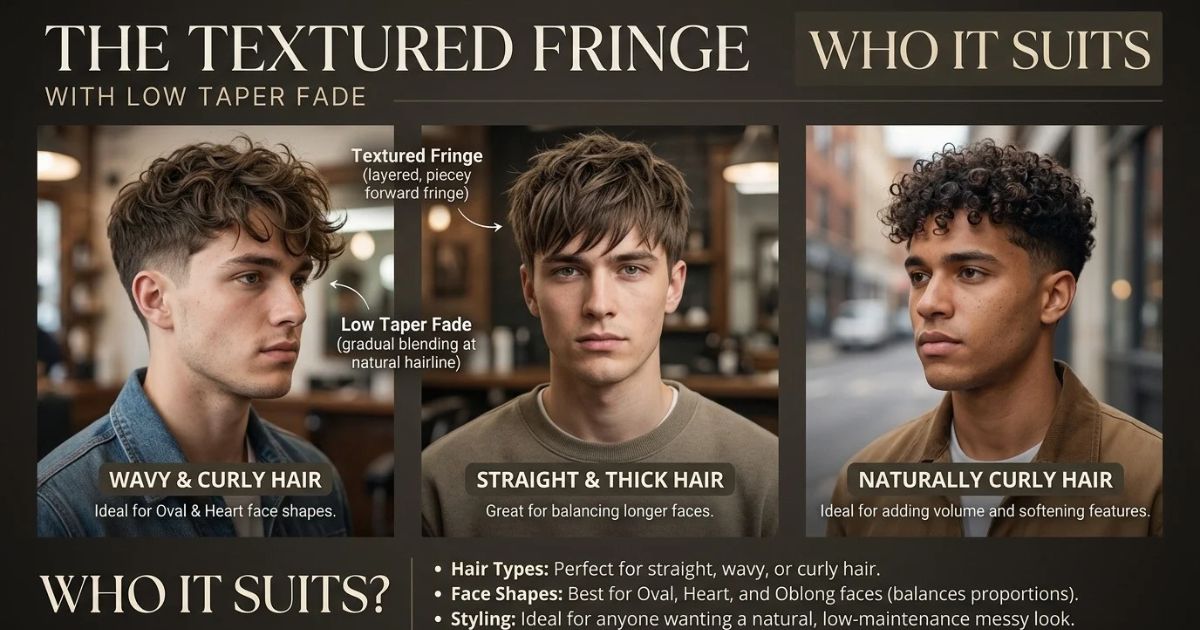
This cut suits most men who want a modern style without a strict routine. It works well for teens, students, office workers, and men in their 30s to 50s who want a fresher look.
It’s a good fit if you:
- Want volume on top with slim sides
- Prefer a subtle fade over a stark skin fade
- Need one cut that works for work and weekends
- Want something that doesn’t need daily precision styling
You may need a modified version if you have a receding hairline, a strong cowlick at the front, or very tightly coiled hair. A good barber can adjust the fringe length and angle for each of these.
Best face shapes
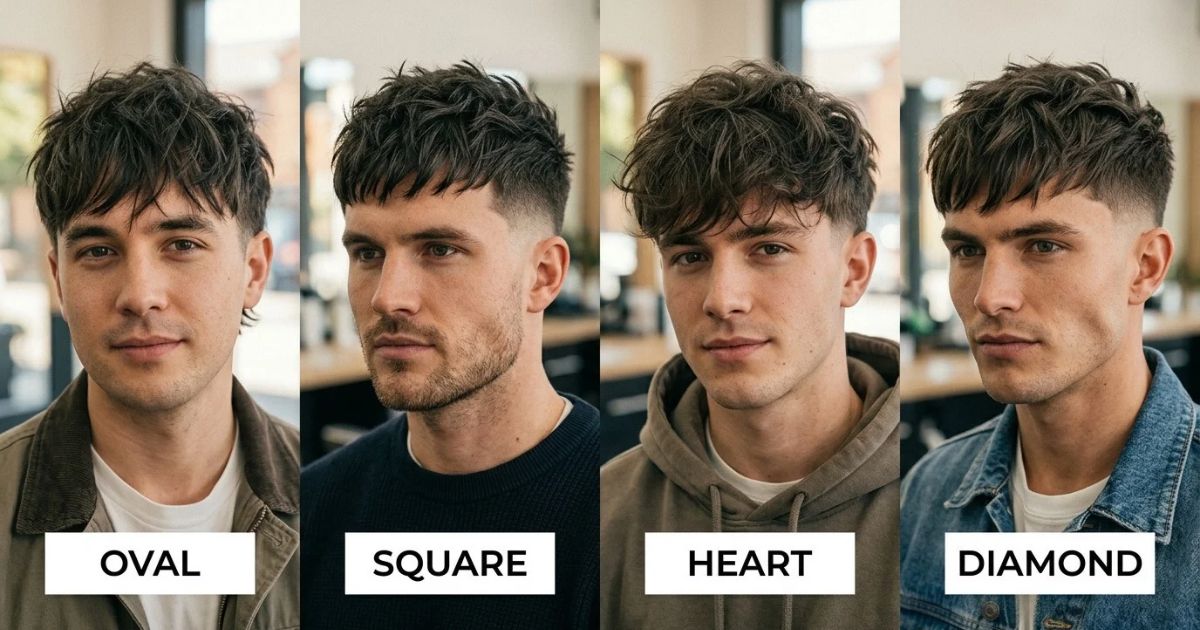
Small changes to fringe length and taper height can balance almost any face. Use this table as a starting point.
| Face shape | Best fringe length | Taper tip | Style goal |
| Oval | Short to long | Any low taper works | Keep proportions balanced |
| Round | Medium, with root lift | Keep sides slim and low | Add height, reduce width |
| Square | Medium, softly textured | Low taper, softer line | Soften the jaw |
| Oblong | Short to medium | Slightly fuller sides | Avoid adding extra height |
| Heart | Medium, swept forward | Clean low taper | Balance a wider forehead |
| Diamond | Medium to long | Low taper with some side length | Soften the cheekbones |
If you’re unsure of your shape, ask your barber. They see face shapes all day and can usually tell at a glance.
Best hair types
The cut works on every hair type, but the technique changes. Tell your barber your hair type so they can adjust.
Straight hair
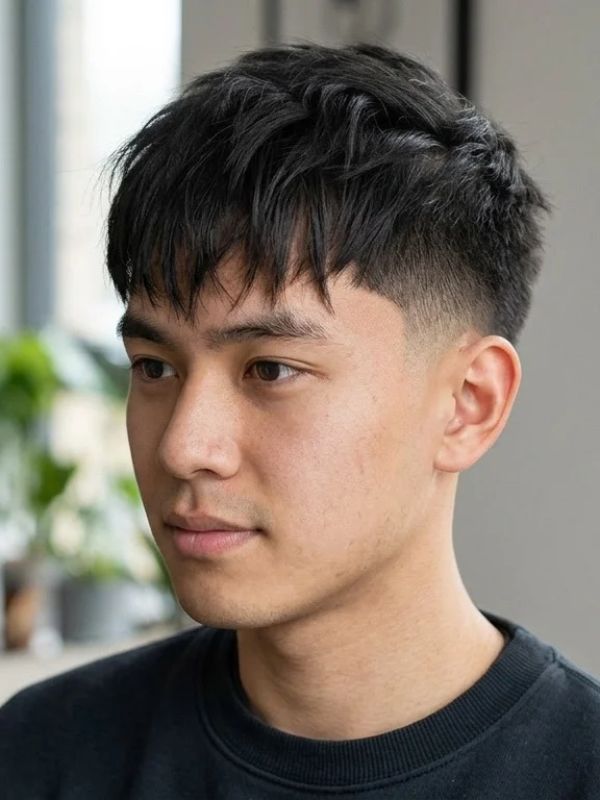
Straight hair shows texture clearly, which makes this cut look sharp. Point cutting adds the movement that straight hair lacks. A little texture powder or sea salt spray keeps the fringe from lying flat.
Wavy hair
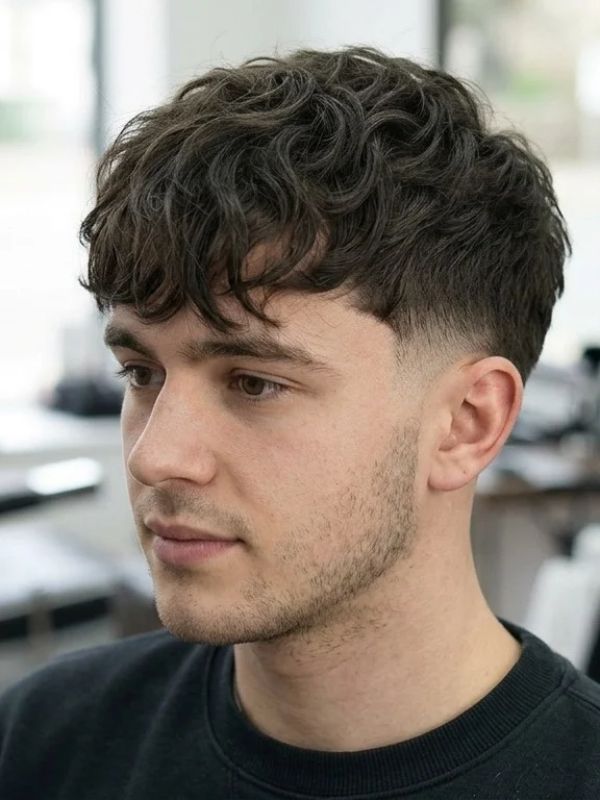
Wavy hair is one of the easiest matches. The natural bend creates the texture for you. Your barber mostly removes bulk and keeps the length balanced so waves don’t puff out at the sides.
Thick hair
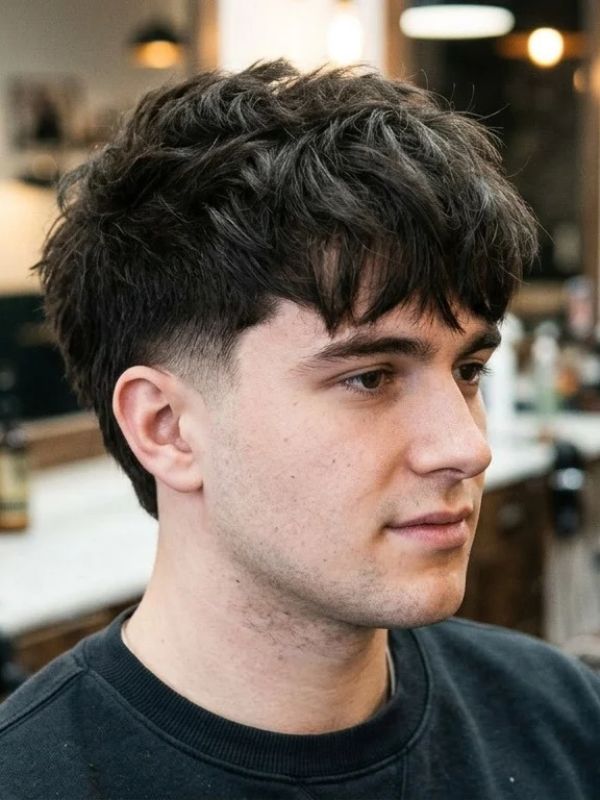
Thick hair can feel heavy on top. Ask for weight removal with texturizing shears so the fringe moves instead of sitting like a block. A slightly shorter fringe also keeps it manageable.
Fine or thin hair
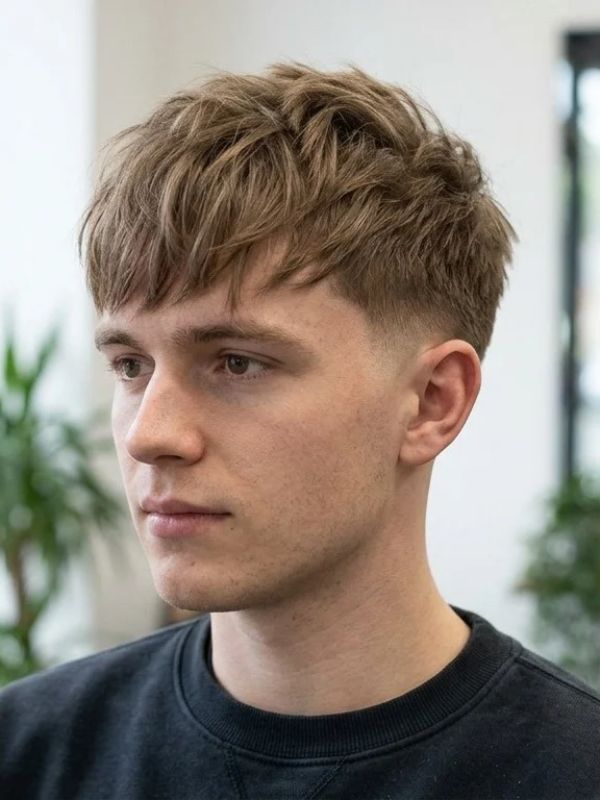
Fine hair needs a lighter touch. Too much thinning makes it look sparse. Ask your barber to keep the ends soft and the length around 4–5 cm. A volumizing mousse or powder at the roots adds lift.
Curly hair
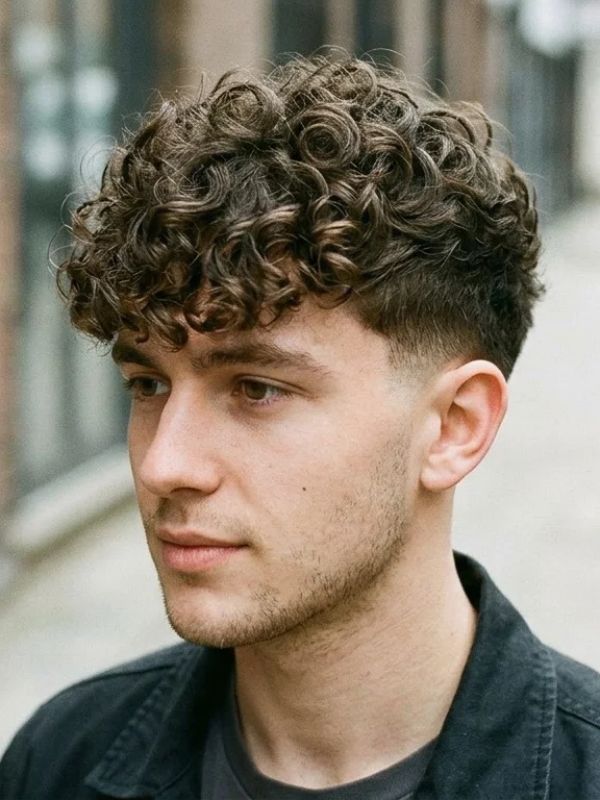
Curls shrink when they dry, so the cut should start a little longer than your target length. Ask your barber to check the shape dry. Keep the sides tapered low so the curls on top become the focus.
| Hair type | Texture method | Ideal fringe length | Best product |
| Straight | Point cutting, light razor | 3–5 cm | Matte clay or powder |
| Wavy | Weight removal | 4–6 cm | Cream or sea salt spray |
| Thick | Texturizing shears | 3–5 cm | Matte clay |
| Fine/thin | Minimal texturizing | 4–5 cm | Mousse or powder |
| Curly | Dry cutting, shape only | 5–7 cm | Curl cream |
The main variations
You can adjust this cut in several ways without changing its core look.
| Variation | What changes | Best for |
| Short textured fringe | Top kept near 3 cm | Low-maintenance routines |
| Medium textured fringe | 4–6 cm top, natural movement | Most men and hair types |
| Messy fringe | Longer, more undone | Casual, off-duty style |
| Blowout fringe | Volume dried upward and forward | Thick or wavy hair |
| Low taper with skin finish | Fades to skin at the neckline | Sharper contrast |
| Crop-style fringe | Shorter, straighter front edge | Straight hair, neat look |
How to choose: If you want the easiest option, go medium. If you like a bolder look and your hair is thick, try the blowout. If your job is conservative, pick the short version.
How to ask your barber
Clear words beat a vague request. Walk in with a plan and a photo.
- Show a reference photo. Ideally bring a front and side view.
- Name the cut. Say “textured fringe on top with a low taper fade.”
- State the fringe length. Use centimeters or point to your eyebrow. For example, “to just above my eyebrows.”
- Choose your fade finish. Say whether you want skin showing or a softer taper with some hair left.
- Ask for texture, not thinning. Request point cutting or light texturizing so the hair keeps body.
- Mention the neckline. Choose rounded, squared, or tapered.
Sample script: “I’d like a textured fringe, about 4 cm at the front, with a low taper fade around the ears and neck. Please point cut the top for movement, and keep the neckline natural.”
If your barber uses clipper guards, this table helps you speak the same language.
| Guard number | Approx. length | Common use in a low taper |
| #1 | 3 mm | Closest part of the taper |
| #2 | 6 mm | Lower-mid blend |
| #3 | 10 mm | Upper blend toward the top |
| #4 | 13 mm | Longer side length, blend into top |
How to style it at home
You need about two minutes and very little product.
- Start with damp hair. Towel-dry until it’s slightly damp, not wet.
- Add prep if needed. Spray sea salt on fine or straight hair for grip.
- Blow-dry briefly (optional). Use medium heat and push the fringe forward to build lift.
- Warm the product. Rub a pea-sized amount of clay or cream between your palms.
- Work it through with your fingers. Start at the back and move toward the fringe.
- Pull and separate. Pinch a few sections at the front to create the choppy look.
- Finish light. Use a small amount of texture spray or a pinch of powder if you need hold.
Quick tip: If your hair looks stiff or shiny, you used too much product. Rinse and start again with half the amount.
Best products
You don’t need many. One or two products cover most hair types.
| Product | Hold | Finish | Best for |
| Matte clay | Medium–strong | Matte | Thick or straight hair |
| Sea salt spray | Light | Natural, grainy | Wavy or fine hair |
| Texture powder | Medium | Matte, airy | Fine hair needing lift |
| Lightweight cream | Light | Soft, natural | Wavy or dry hair |
| Curl cream | Light–medium | Defined, soft | Curly hair |
| Volumizing mousse | Light | Fluffy | Thin hair |
What to avoid: Heavy gel and shiny pomade weigh the fringe down and make it look clumped instead of textured.
Maintenance and trim schedule
The sides and the top age at different speeds. Plan visits around the taper, since it grows out fastest.
| Area | Trim every | Why |
| Neckline and sideburns | 2–3 weeks | Edges blur quickly |
| Taper (sides and back) | 3–4 weeks | Keeps the blend smooth |
| Fringe and top | 4–6 weeks | Needs shape and weight control |
| Full reshape | 6–8 weeks | Resets length and texture |
Between visits:
- Tidy the neckline and sideburns with a trimmer if you’re comfortable doing it.
- Wash with a gentle shampoo and don’t over-wash, which can dry the hair and flatten the texture.
- Ask your barber to remove weight from the top if it starts to feel heavy.
Common mistakes to avoid
Most disappointing results come from a few simple errors.
- Asking for the fade too high. A mid or high fade changes the whole look. Say “low” and point to where your ear meets your head.
- Cutting the fringe too short. Under 3 cm, it can’t fall forward or move.
- Using too much product. It makes the top stiff and takes away the natural finish.
- Combing it flat. Fingers keep the texture. A comb smooths it out.
- Ignoring hair type. A blunt fringe on very curly hair, or an over-thinned fringe on fine hair, rarely works.
- Skipping the reference photo. Words can mean different things to different people.
- Waiting too long between trims. The taper loses shape after about four weeks.
FAQs about the textured fringe with low taper fade
What is a textured fringe with low taper fade?
It’s a haircut with choppy, forward-falling hair on top and sides that shorten gradually from a low starting point near the ears and neck.
Does a textured fringe with low taper fade suit round faces?
Yes. Keep some height at the roots and slim, low-tapered sides to add length and reduce the look of width.
How long should the fringe be?
Most men do well with 3–6 cm. Shorter suits low-maintenance routines, and longer gives a messier, more relaxed look.
Can I get this cut with thin hair?
Yes. Ask for light texturizing only, keep the fringe around 4–5 cm, and use mousse or powder at the roots for volume.
How often should I get a trim?
Plan on a taper and neckline cleanup every 3–4 weeks. The top can usually go 4–6 weeks between cuts.
What product is best for styling it?
Matte clay works for most hair types. Use sea salt spray or cream for lighter, more natural movement.
Is a low taper the same as a low fade?
Not exactly. A taper keeps some hair at the edges, while a fade usually blends down to the skin.
Does this cut work for curly hair?
Yes. Ask your barber to cut the curls dry, leave a little extra length, and keep the sides tapered low.
Final thoughts
A textured fringe with low taper fade is a smart choice because it balances polish and ease. The tidy sides keep you looking sharp, while the loose top adds personality. It also adapts well to different face shapes, hair types, and daily routines.
To get the best result, choose a fringe length that suits your face, tell your barber exactly what you want, and use light matte products at home. Book regular taper trims, and the cut will stay clean, natural, and easy to wear.