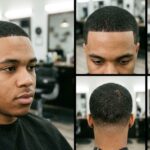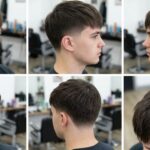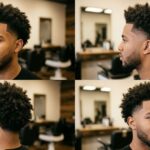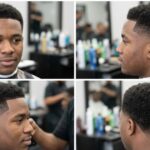
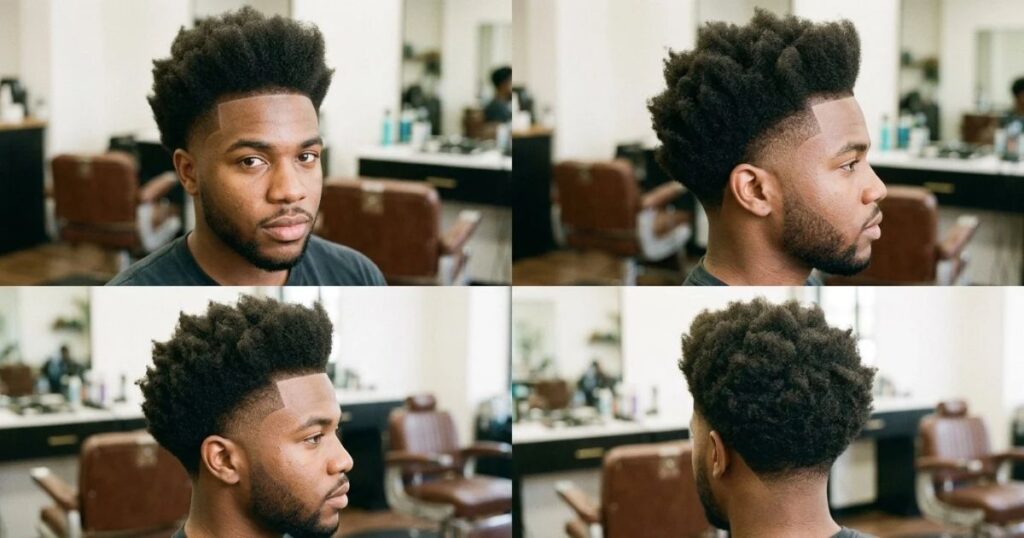
The low taper fade blowout is one of the most requested men’s haircuts right now. It pairs short, neatly blended sides with a full, lifted top. The result looks polished but relaxed, and it works just as well in an office as it does on a weekend out.
This guide explains what the cut is, who it suits, and how to ask your barber for it. You will also learn how to style it at home, which products help, how often to book a touch-up, and which mistakes to avoid.
What is a low taper fade blowout?
A low taper fade blowout is a men’s haircut with sides and back that fade gradually shorter near the ears and neckline, topped with longer hair that is blow-dried upward and back for volume. It combines a subtle low taper with a textured, airy blowout.
The two parts do different jobs:
- The low taper: The shortest hair stays close to the hairline, around the ears, sideburns, and nape. It never climbs high up the head.
- The blowout: The top is left longer, then dried with heat so the roots lift and the hair holds shape and movement.
Barbers usually build the taper with clipper guards, often starting near a #0.5 or #1 at the edges and stepping up to #2 or #3 before blending into the top. Some clients ask for a skin fade at the very bottom, while others prefer a soft shadow instead of bare skin.
The cut has also spread because the tools are easy to find. A hair dryer, a round brush, and a light styling product get most men close to a barbershop finish.
Read More:Textured Fringe With Low Taper Fade: Complete Style Guide for Men
Low taper fade blowout vs a regular blowout
A regular blowout focuses almost entirely on the top. The sides are usually left longer or trimmed to one even length. The low taper version adds a defined, blended fade, which frames the volume and makes it look deliberate.
| Feature | Low taper fade blowout | Regular blowout |
| Sides and back | Tapered gradually, short near ears and neckline | Left longer or trimmed evenly |
| Overall shape | Sharp base with full top | Fuller, rounder, softer outline |
| Contrast | Clear but subtle | Low |
| Neatness | Stays tidy for weeks | Can look bulky as it grows |
| Barber visits | Every 3 to 4 weeks | Every 4 to 6 weeks |
| Best for | Clean, modern looks | Relaxed, longer styles |
The main difference is structure. Without a fade, volume can look heavy or shapeless. The taper acts like a frame around a picture.
Who does the low taper fade blowout suit?
This haircut is flexible, but a few details help you choose the right version for your head and hair.
Best face shapes
| Face shape | Why it works | Barber tip |
| Oval | Balanced proportions suit almost any variation | Try any version you like |
| Round | Height on top adds vertical length and slims the face | Keep sides tight and top lifted |
| Square | Volume softens a strong jaw while the taper keeps it defined | Add some texture on top |
| Oblong | Too much height can lengthen the face further | Keep volume moderate and consider a fringe |
| Heart | Fuller top balances a narrow chin | Keep the sides slightly fuller |
Hair types and textures
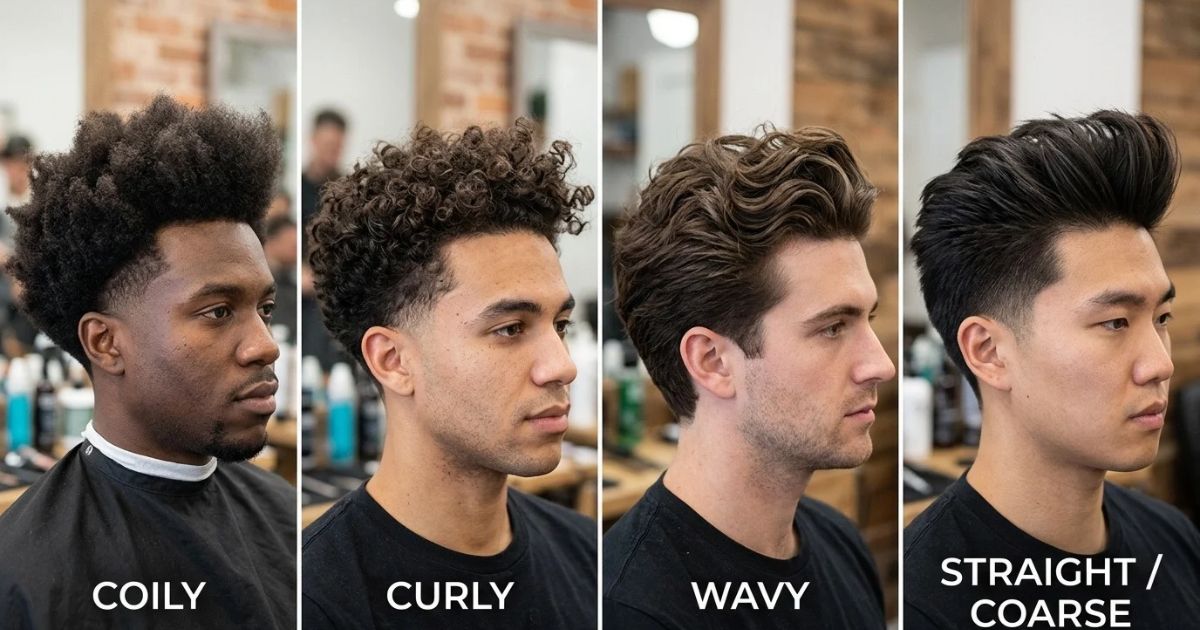
Medium to thick hair is the easiest to style because it holds volume naturally. Fine hair can still work. Ask for shorter layers on top and use a lightweight mousse or powder to build body.
Very thin or receding hair needs a more careful approach. A shorter, textured top with a softer taper often looks fuller than a long, heavy blowout.
Straight, wavy, and curly hair
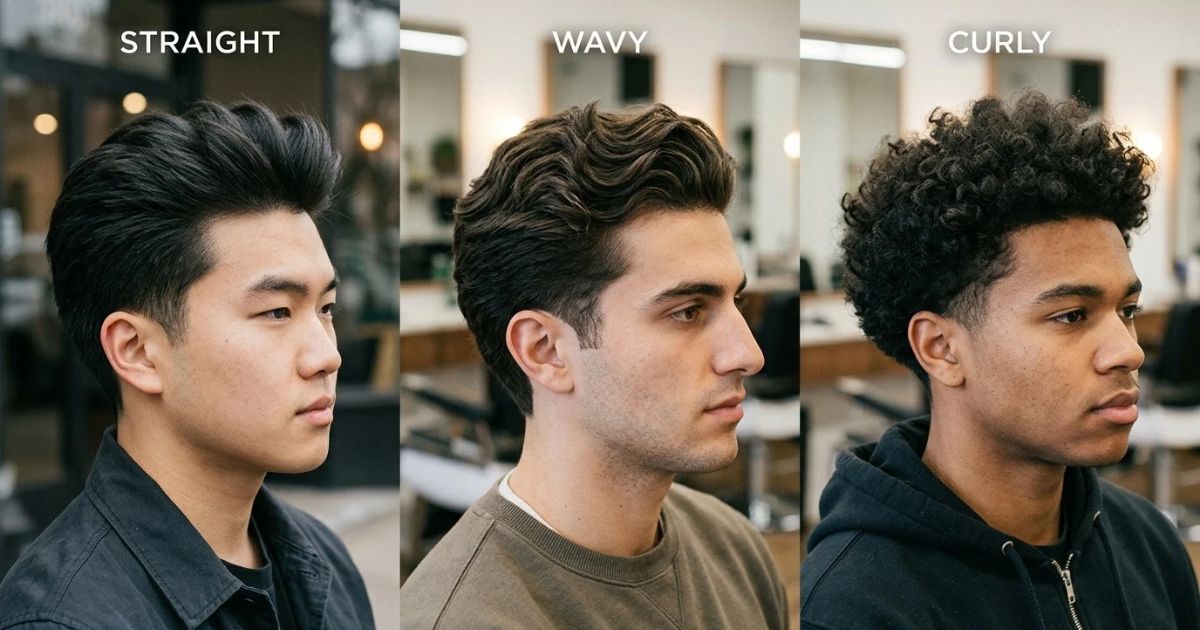
| Hair type | What you get | Styling focus |
| Straight | Smooth, lifted finish, similar to a quiff | Root lift with a dryer and brush |
| Wavy | Natural movement and a relaxed, airy shape | Light product and finger styling |
| Curly | Bouncy top with tight, clean sides | Curl cream and a diffuser |
| Coily | Rounded, high-volume top with a crisp edge | Moisture, a pick, and gentle shaping |
A good barber works with your natural pattern rather than fighting it. That is why the cut looks good on so many different heads.
Popular low taper fade blowout variations
Think of this cut as a base. You can change the top, the part, or the beard to get a very different result.
Classic
A clean low taper with a smooth, lifted top brushed up and slightly back. It is the safest version and works almost anywhere.
Textured
Choppy layers replace the smooth finish. Matte clay or texture powder gives a lived-in look that hides small flaws and needs less precision each morning.
Curly
The curls stay intact and sit up on top, with the sides kept short and neat. A curl cream and a diffuser reduce frizz and keep definition.
Wavy
Waves add loose movement. A sea salt spray and a quick blow-dry give the top a relaxed, slightly tousled finish.
With a fringe
The hair comes forward into a soft fringe instead of being swept back. It looks younger and more casual while the taper keeps the outline tidy.
With a middle part
A centre part splits the volume evenly and adds structure. It suits thicker hair and looks sharp for dressier occasions.
Messy
The top is scrunched or tousled for a deliberately undone look. The low taper stops the style from looking sloppy.
With a beard
A beard adds balance, especially for round and oval faces. Ask your barber to blend the sideburn fade directly into the beard so one smooth line runs from hairline to jaw.
| Variation | Best hair type | Effort level | Vibe |
| Classic | Straight to wavy | Medium | Clean and versatile |
| Textured | Any | Low | Casual and modern |
| Curly | Curly to coily | Medium | Full and natural |
| Wavy | Wavy | Low | Relaxed |
| With a fringe | Straight to wavy | Low | Youthful |
| With a middle part | Medium to thick | Medium | Polished |
| Messy | Any | Low | Undone |
| With a beard | Any with facial hair | Medium | Balanced and mature |
How to ask your barber for a low taper fade blowout
Clear communication prevents most haircut disappointments. A few specific words make a big difference.
What to say
Try something like this:
“I’d like a low taper fade on the sides and back, staying close to my ears and neckline. Please leave enough length on top so I can blow-dry it up for volume.”
If you have a preference, add whether you want a skin fade at the bottom or a softer shadow fade. Mention the guard numbers you like if you know them.
Reference photo tips
- Choose a photo of someone with a similar hair texture and density.
- Bring a front view and a side view so the barber can judge fade height.
- Point out what you like, such as the volume, the part, or the neckline shape.
- Mention anything you dislike, such as a fade that sits too high.
Barber terms worth knowing
| Term | Meaning |
| Low taper | A fade that stays near the hairline, ears, and nape |
| Skin fade | A fade that blends down to bare skin |
| Shadow fade | A softer fade that stops just above skin |
| Neckline taper | How the back of the neck is finished |
| Sideburn taper | How the fade blends around the sideburns |
| Guard number | Clipper attachment that sets hair length |
| Shear-over-comb | A scissor technique for blending without clippers |
| Texturizing | Thinning or chopping the top for movement |
What happens during the cut
Most barbers follow a similar order:
- Consultation: They check your hair type, density, and cowlicks, then confirm the fade height.
- Edges first: The neckline and sideburns are set to show where the fade will sit.
- Clipper work: They build the taper using lower guards near the edges and higher guards as they move up.
- Blending: Shears or clipper-over-comb smooth any visible lines between guard levels.
- Top shaping: The top is trimmed and layered while keeping enough length for lift.
- Finish: Many barbers blow-dry and style the hair so you can see the final shape.
A good barber leaves the top longer at the start. It is easy to cut more off later, but you cannot put it back.
How to style a low taper fade blowout at home
Step by step
- Wash and condition your hair, then towel-dry until it is damp, not dripping.
- Apply a heat protectant or lightweight mousse to the roots.
- Rough-dry the top with your fingers to remove most of the moisture.
- Dry the hair upward and back using a round brush or your fingers.
- Let the hair cool for a few seconds so the shape sets.
- Add a small amount of styling product and shape the finish.
- Lock it in with a light mist of hairspray if needed.
Blow dryer technique
- Use medium heat and keep the dryer a few inches from your head.
- Point the nozzle down the hair shaft, which helps reduce frizz.
- Start at the roots, where lift matters most, then move to the ends.
- Finish with a short blast of cool air to set the shape.
Adding texture and volume
- Use a texture powder at the roots for instant grip and lift.
- Rub a pea-sized amount of clay between your palms, then work it through the hair in pieces.
- For wavy or curly hair, scrunch gently and avoid over-brushing.
- Dry hair fully. Hair that is only partly dry often collapses within a few hours.
Best products to use
| Product | Best for | Finish |
| Mousse | Fine or flat hair | Light lift, soft hold |
| Sea salt spray | Wavy or curly hair | Grit and natural texture |
| Texture powder | Thin or fine hair | Volume with a matte look |
| Matte clay | Thick or textured styles | Strong hold, no shine |
| Lightweight pomade | Classic, smoother looks | Controlled with slight shine |
| Curl cream | Curly and coily hair | Defined, frizz-free curls |
| Heat protectant | All hair types | Protects from dryer damage |
| Light hairspray | All hair types | Flexible all-day hold |
Start with a small amount. Heavy product weighs hair down and is the fastest way to ruin a blowout.
Maintenance and upkeep
How often to get a touch-up
Book a barber visit every three to four weeks. The fade sits low, so it grows out more gracefully than a high fade, but the edges still soften first.
Keeping the fade clean
- Check the neckline and sideburns every week.
- Book a quick cleanup around week two if you like very crisp edges.
- Avoid shaving the neckline yourself, since it is easy to create an uneven line.
Maintaining volume between cuts
- Ask for a light trim of the top layers if it begins to feel heavy.
- Wash with a volumizing shampoo and avoid heavy conditioners at the roots.
- Dry fully every time you style.
| Time since cut | What to expect | What to do |
| Week 1 to 2 | Sharp edges and full shape | Style as usual |
| Week 2 to 3 | Neckline starts to soften | Book a quick cleanup if desired |
| Week 3 to 4 | Fade blends less clearly, top feels heavier | Schedule your next cut |
| Week 4 plus | Fade looks grown out | Full haircut needed |
Common mistakes to avoid
| Mistake | Why it hurts | Better approach |
| Cutting the top too short | There is no length left to lift | Start longer and trim gradually |
| Not stating fade height | A low taper can drift higher | Say clearly: low, near the ear |
| Using too much product | Hair gets heavy and flat | Use a pea-sized amount |
| Skipping the blow-dry | Volume disappears quickly | Dry the roots for at least a few minutes |
| Using very high heat | Dries and damages hair | Use medium heat and a protectant |
| Brushing curls too much | Causes frizz and flattens texture | Shape with fingers or a pick |
Low taper fade blowout for different hair lengths
| Top length | Result | Notes |
| Short (about 2 to 3 inches) | Subtle lift and a neat shape | Use powder or mousse for body |
| Medium (about 3 to 5 inches) | Best balance of volume and control | Ideal for most men |
| Long (5 inches or more) | Full, flowing volume or a fringe | Needs more styling time |
Medium length is usually the sweet spot. It holds volume without needing constant effort.
How it compares to other fades
| Style | Fade position | Look | Maintenance |
| Low taper fade blowout | Near ears and neckline | Subtle and clean | Medium |
| Mid taper blowout | Around the temples | Bolder contrast | Medium to high |
| High taper blowout | High on the sides | Sharp and dramatic | High |
| Drop fade blowout | Curves down behind the ear | Stylised, extra shape | Medium to high |
| Burst fade blowout | Curves around the ear | Modern, edgy | High |
| Classic taper | Minimal fade | Traditional | Low |
The low version suits men who want a refined, less dramatic edge.
Is it a professional haircut?
Yes, in most workplaces. The low fade is understated, and the top can be styled to match the setting.
For a formal look, keep the volume moderate, use a smooth or lightly textured finish, and choose a side or middle part. For after-hours, add more texture and lift.
Frequently asked questions
What is a low taper fade blowout?
It is a haircut with sides that fade low near the ears and neckline and a longer top that is blow-dried for volume.
Is a low taper fade blowout good for curly hair?
Yes. Curls add natural lift, and the low taper keeps the sides neat.
How long does a low taper fade blowout last?
It stays sharp for about three to four weeks before the edges soften.
What should I tell my barber?
Ask for a low taper on the sides and back, close to the ears, with enough length on top for a blowout.
Do I need to style it every day?
Usually a few minutes with a dryer and light product is enough to restore the volume.
Which face shapes suit a low taper fade blowout?
It flatters oval, round, and square faces, and can be adjusted for oblong faces.
Is a low taper fade blowout hard to maintain?
Not really. You need regular trims and a quick daily routine to keep the shape.
Can men with thin hair get a low taper fade blowout?
Yes. Ask for shorter layers and use powder or mousse to create the look of fuller hair.
What is the difference between a low taper and a low fade?
A taper keeps more length and leaves a gentler shape, while a fade often goes shorter, sometimes to bare skin.
Conclusion
The low taper fade blowout works because it balances two opposites. The low taper keeps the sides tidy and understated, while the blowout adds shape and movement on top. It suits most face shapes, adapts to straight, wavy, and curly hair, and holds up in both casual and professional settings.
Get the best result by bringing a clear reference photo, asking for the fade to stay low, and leaving enough length on top. Dry the hair fully, use light product, and book a touch-up every three to four weeks. Small habits make the cut look salon-fresh.