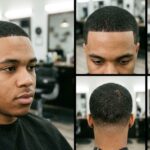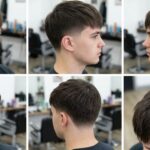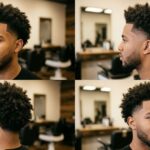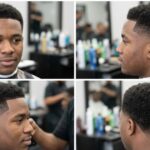
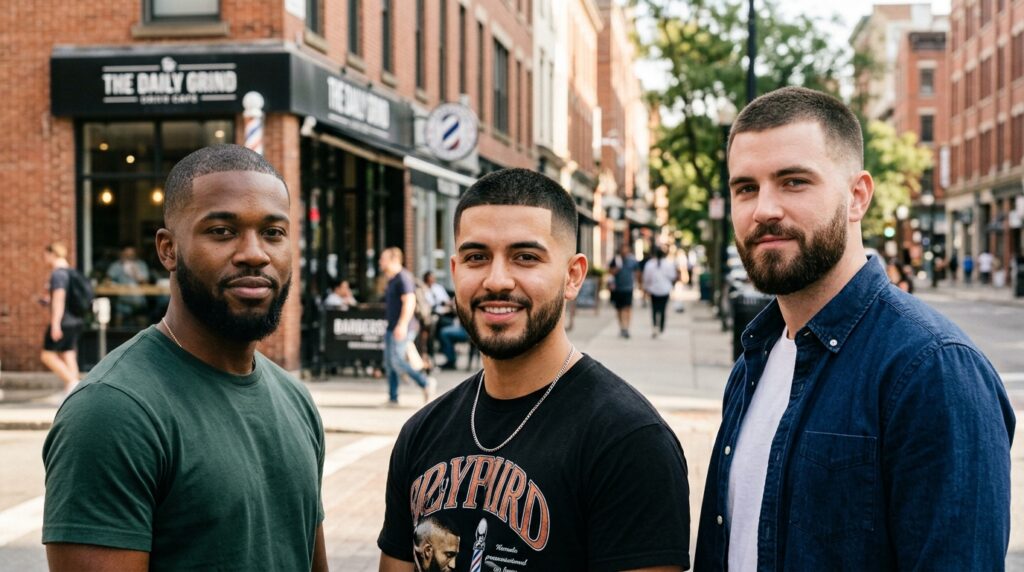
A low taper fade with buzz cut pairs a clipper-short top with soft, shaped sides. The blend starts low, right around the sideburns, ears, and neckline, so the cut looks sharp without going dramatic. It’s the kind of haircut that looks intentional on day one and still decent on day twenty.
This guide covers the best guard sizes, seven popular styles, face shape and hair type matches, and the exact words to use in the barber chair. You’ll also find a comparison with a regular buzz cut, common mistakes, and simple upkeep tips so your next haircut lands right.
What Is a Low Taper Fade with Buzz Cut?
A low taper fade with buzz cut is a short clipper haircut where the top is cut to one even guard length, and the hair around the sideburns, ears, and neckline gradually gets shorter. The blend stays low on the head, so the result looks tidy and natural instead of heavily faded.
Strictly speaking, a taper shortens only the edges, while a fade carries the shortening farther up the sides. In real barbershops the two words get mixed up all the time. So don’t rely on the label alone. Give your barber guard numbers.
The cut has four parts:
- Top: one even length, usually a #1 to #4 guard
- Sides and back: the same guard as the top, or one step shorter
- Blend: begins near the ear and nape, then shortens toward the hairline
- Finish (optional): a line up, skin finish, or beard blend
Why This Haircut Is So Popular
Most short haircuts have one of two problems. They look flat on day one, or they look messy by week two. The low taper avoids both.
Here’s why men keep asking for it:
- No styling. Wash it, dry it, done.
- Grows out gracefully. There’s no hard contrast line to lose, so it just looks slightly longer.
- Fits every dress code. It works at the office, in class, at the gym, and at weddings.
- Stays cool. It’s comfortable in summer and under caps or helmets.
- Forgiving. A soft blend hides small imperfections better than a skin fade.
- Easy to adjust. Change the guard number next visit and you’ve got a new look.
Barber tip: If you’re switching from longer hair, this is a safer first step than a full skin fade.
Best Buzz Cut Guard Sizes for a Low Taper
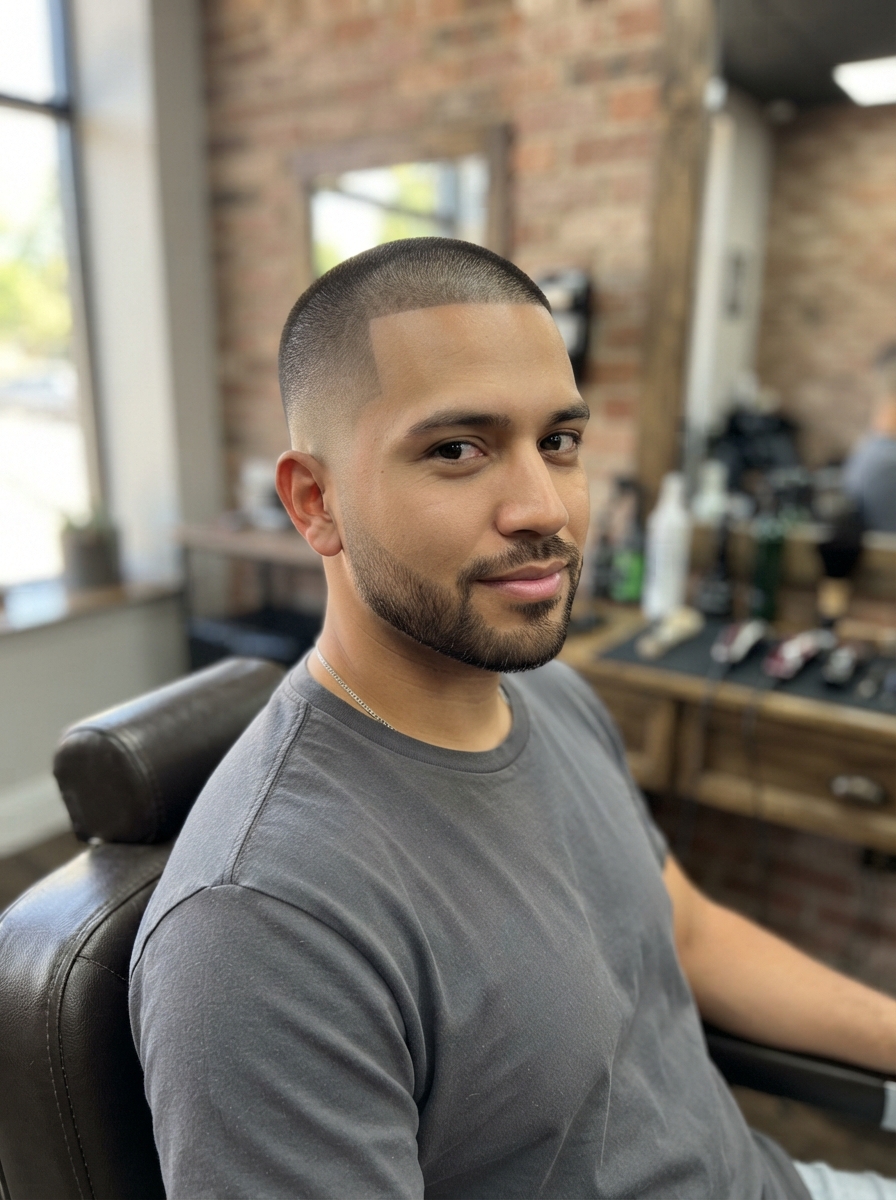
The guard you pick decides how the cut looks more than anything else. Each number up adds roughly one-eighth of an inch. Exact lengths vary slightly between clipper brands, so treat these as close estimates.
| Guard | Hair Left (mm) | Hair Left (inches) | Overall Look | Best For |
| #1 | About 3 mm | ⅛” | Very close, scalp visible | Thick hair, strong jawlines |
| #2 | About 6 mm | ¼” | Clean and short | First-timers, most face shapes |
| #3 | About 10 mm | ⅜” | Softer, fuller | Curly or wavy hair, thinning areas |
| #4 | About 13 mm | ½” | Soft short crop | Fine hair, long faces, growing out |
The taper itself uses shorter settings than the top. Barbers often blend down with half guards, or use the bare blade for a skin finish.
#1 Guard Buzz Cut
The #1 is the shortest standard buzz. It gives a sharp, almost military look and shows plenty of scalp. It’s a good match for thick, dark hair, but on fine or light hair the scalp shows through. Be sure before you commit.
#2 Guard Buzz Cut
The #2 is the safest starting point for most guys. It’s clean and short, but it still leaves a little cushion over the scalp. If you’ve never had a buzz cut, start here. You can always go shorter next time.
#3 Guard Buzz Cut
A #3 is the crowd favorite. It looks neat, keeps some fullness, and hides minor scalp marks or a receding hairline better than a #1 or #2. It also gives the low taper more contrast to work with, so the blend reads clearly.
#4 Guard Buzz Cut
The #4 sits on the border between a buzz cut and a short crop. It suits fine hair and longer faces. It’s also the easiest length to grow out of if you decide you want more on top later.
Read More:Low Taper vs Burst Fade: Which Haircut Looks Better on You 2026
Best Low Taper Fade with Buzz Cut Styles
The same base cut can look quite different depending on the finish. Here’s a quick comparison before the details.
| Style | Typical Top Guard | Upkeep Level | Best For |
| Classic low taper buzz | #2 to #3 | Low | Everyday, work, school |
| Buzz cut with line up | #2 to #3 | Medium | Sharp, defined look |
| Low taper buzz with beard | #2 to #3 | Medium | Men with facial hair |
| Skin fade low taper buzz | #1 to #3 | High | Bold contrast |
| Curly buzz with low taper | #3 to #4 | Low to medium | Curly, coily hair |
| Long buzz with low taper | #4 to #6 | Low | Fuller, softer look |
| Athletic buzz | #2 to #3 | Low | Sports, gym, active days |
Classic Low Taper Buzz Cut
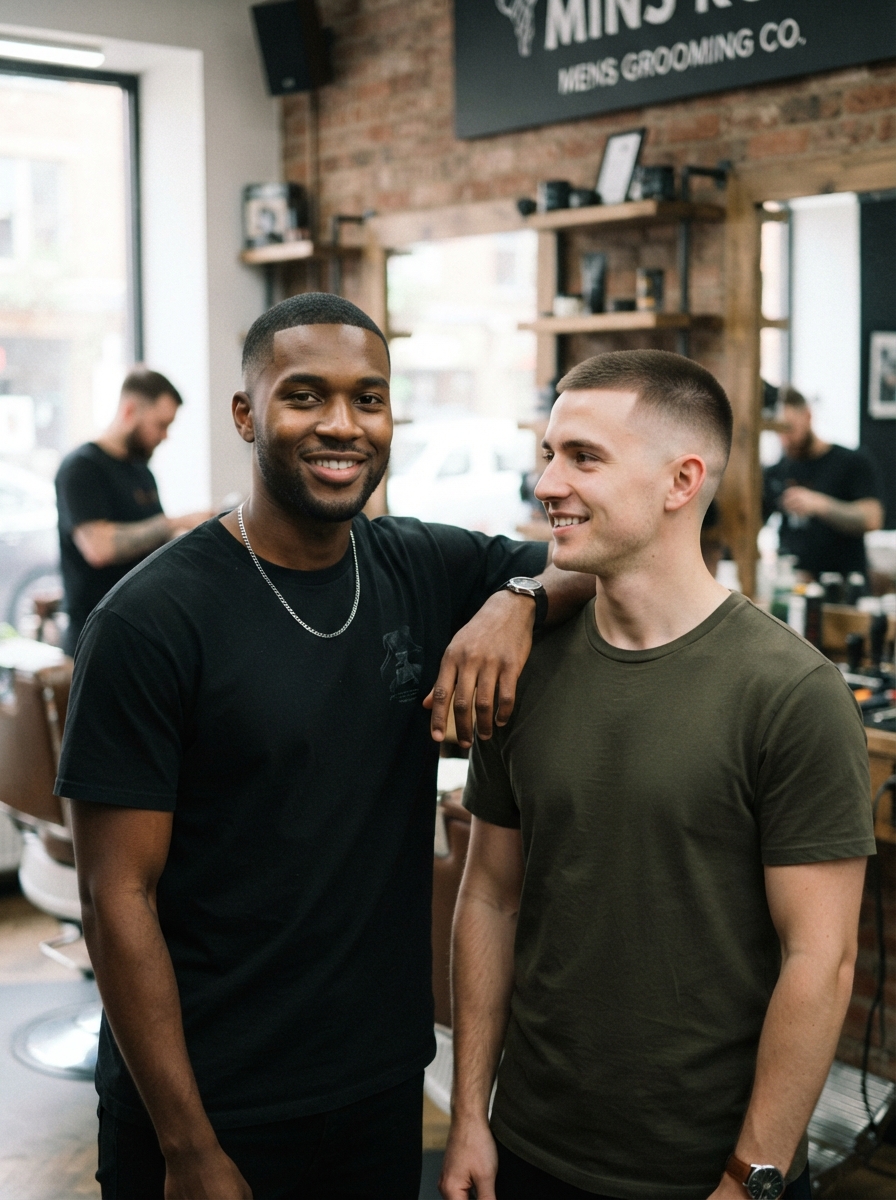
This is the default version. One even length on top, a soft blend at the ears and nape, and nothing else. It’s neat, low-key, and works for almost any lifestyle.
Buzz Cut with Line Up
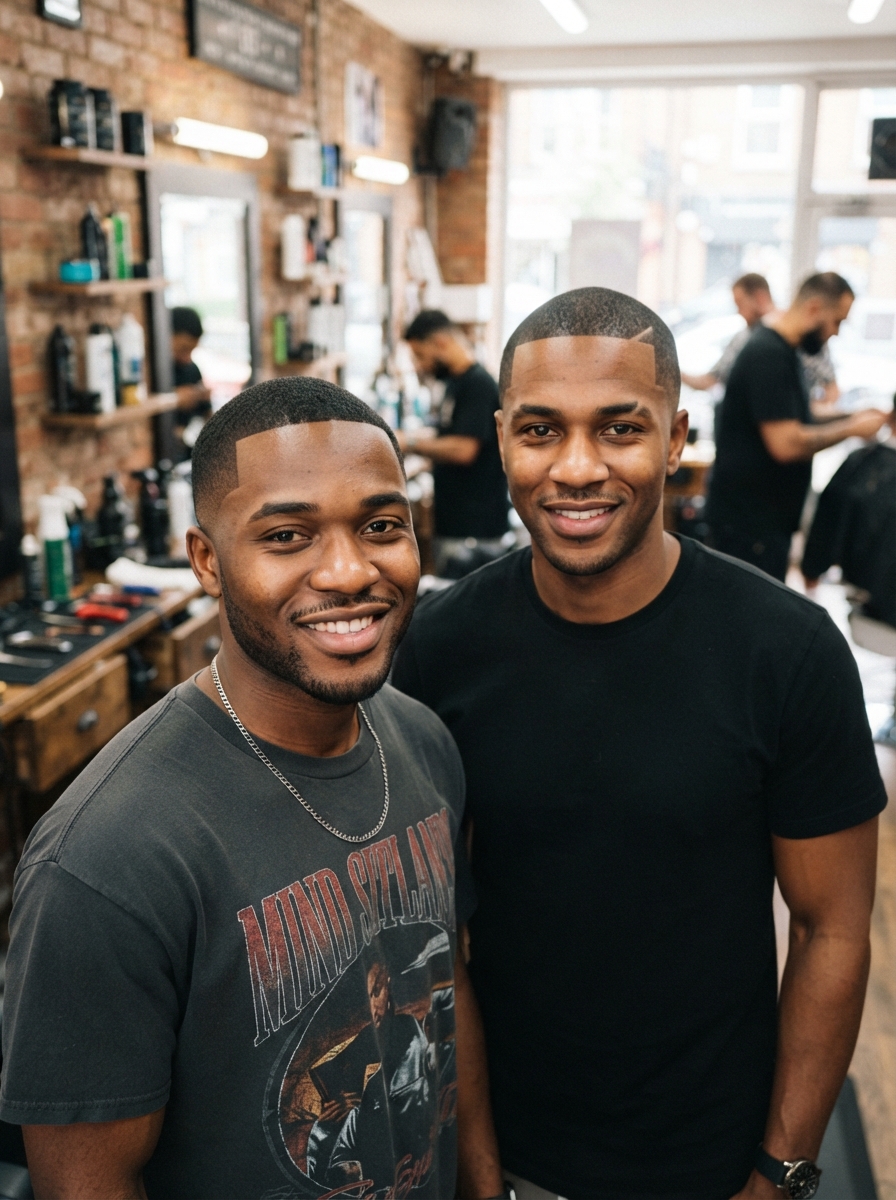
A line up (also called an edge up) squares off the hairline at the forehead and temples. It makes the cut look fresh and framed. The trade-off is that sharp edges soften after about ten days, so expect a quick touch-up.
Low Taper Buzz Cut with Beard

The taper can flow straight into the beard, so the sideburns, cheeks, and jaw look connected. A short, well-kept beard adds structure to a buzz cut, especially on rounder faces. Ask your barber to blend the two rather than cutting them separately.
Skin Fade Low Taper Buzz
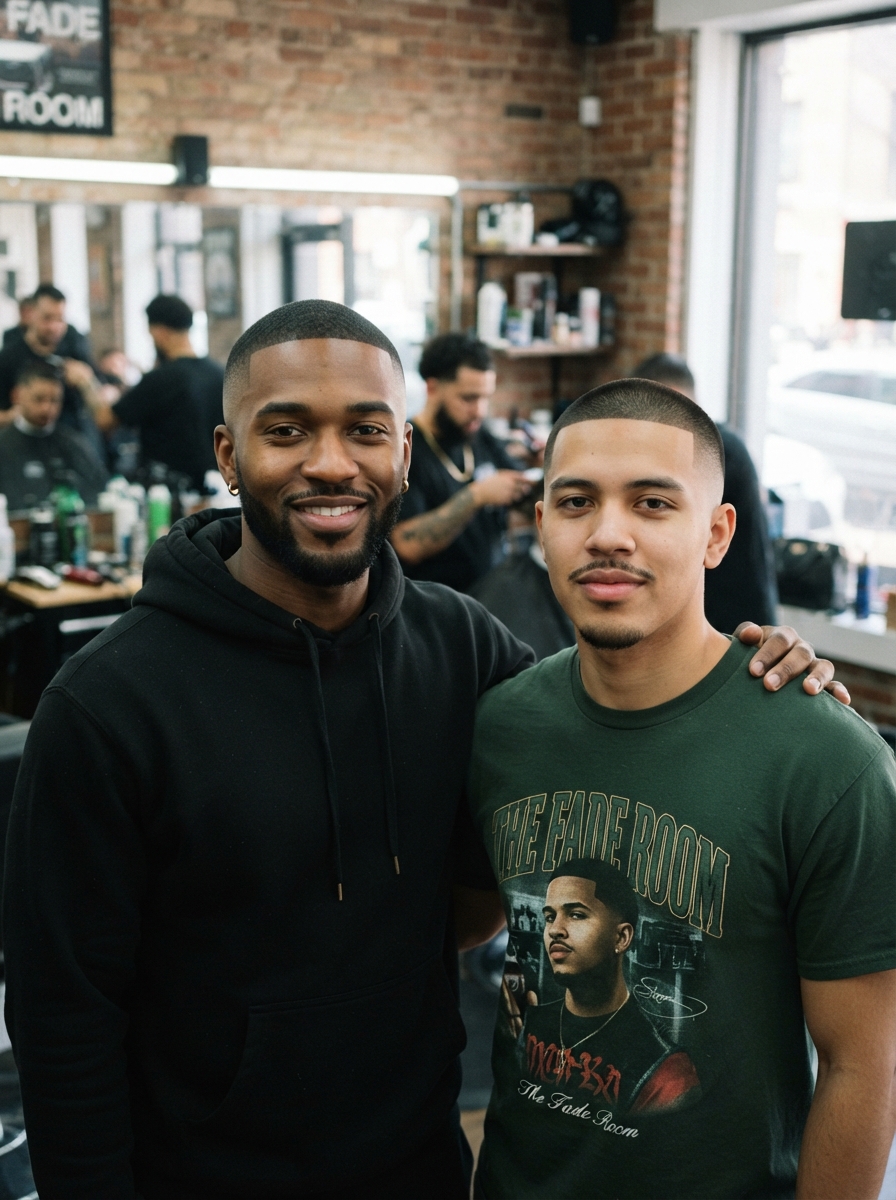
Here the bottom of the blend goes right down to bare skin. That creates stronger contrast and a more modern finish. Skin fades lose their crispness faster, so plan on a trim every two weeks or so.
Curly Buzz Cut with Low Taper

Curls and coils keep their natural texture even at short lengths. Most curly-haired men look better at a #3 or #4 than at a #1. The taper keeps the sides from puffing out while the top holds its shape.
Long Buzz Cut with Low Taper
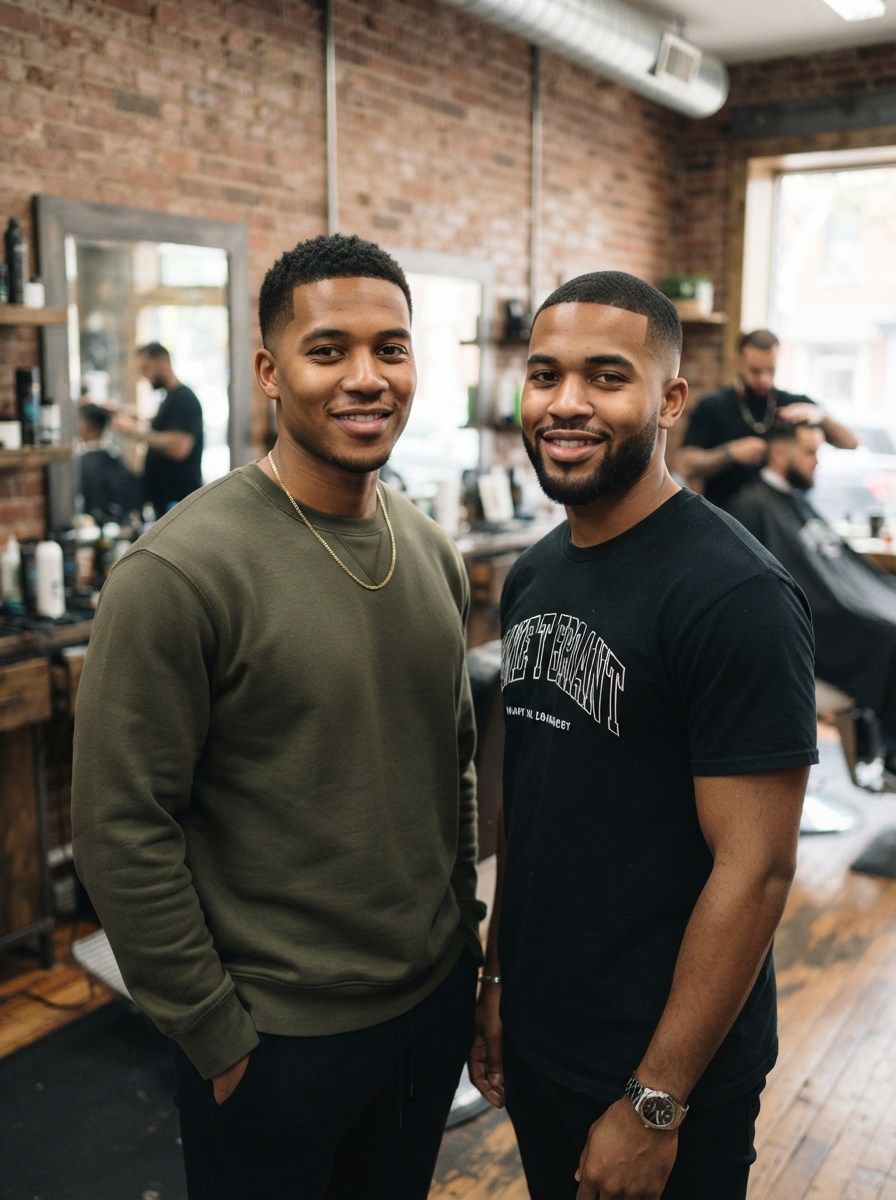
A “long” buzz uses a #4 to #6 guard on top. You get more coverage and softness, and the taper still keeps the outline clean. It’s a good choice if a very short cut feels like too big a jump.
Athletic Buzz Cut

This is practical grooming. It dries fast, doesn’t get in the way, and fits under helmets and caps. Most athletes go with a #2 or #3 and a simple taper, then skip the line up to keep upkeep minimal.
Which Face Shapes Suit This Haircut?
The cut works on most faces. A few small tweaks make it work better.
| Face Shape | Suggested Guard | Small Tweak |
| Round | #3 to #4 | Add a line up for definition |
| Oval | #1 to #4 | Almost anything works |
| Square | #1 to #2 | Keep edges crisp to show the jaw |
| Long | #3 to #4 | Avoid going very short and tight |
Round Face
Very short sides can make a round face look wider. A #3 or #4 with a low taper keeps the outline soft, and a crisp line up adds angles where you want them. A short beard helps too.
Oval Face
Oval faces are the most flexible. Any guard from #1 to #4 works, so choose based on hair type and how much maintenance you want.
Square Face
A square jaw already has strong lines. A #1 or #2 with sharp edges shows it off. If you want a slightly softer look, move up to a #3.
Long Face
Go too short and a long face can look even longer. A #3 or #4 adds a bit of balance. Keep the taper low, since a high blend would stretch the face further.
Best Hair Types for This Cut
| Hair Type | Suggested Guard | Why It Works |
| Straight | #2 to #3 | Shows the cleanest, sharpest lines |
| Thick | #1 to #3 | Taper removes bulk from the sides |
| Curly | #3 to #4 | Keeps texture without looking patchy |
| Fine | #3 to #4 | Looks fuller than an ultra-short cut |
Straight Hair
Straight hair lies flat and shows every line of the blend. That’s great if you want a crisp result. Just note that very short guards on light-colored straight hair will show more scalp.
Thick Hair
Thick hair can look boxy or heavy on the sides. The taper trims that bulk without a dramatic fade. You can go as short as a #1 and still have plenty of coverage.
Curly Hair
Curly hair adds natural depth to a buzz. Keep the top at a #3 or #4 so the curl pattern shows, and let the taper handle the neat edges. Ask your barber to check the hairline carefully, since curls can hide uneven spots.
Fine Hair
Fine hair can look sparse when it’s cut too short. A #3 or #4 gives the illusion of more density. A soft taper works better than a stark skin fade here, because it doesn’t create harsh contrast.
Low Taper Buzz Cut vs Regular Buzz Cut
A regular buzz cut is the same length everywhere. A low taper version adds a gentle blend at the edges. That one detail changes how the cut looks and how it ages.
| Feature | Low Taper Buzz Cut | Regular Buzz Cut |
| Edges | Blended, shaped | Uniform, blunt |
| Grow-out | Gradual and neat | Even, but the outline gets fuzzy |
| Overall look | Polished, defined | Simple, utilitarian |
| Trim frequency | Every 2 to 3 weeks | Every 3 to 4 weeks |
| Chair time and cost | Usually a bit more | Usually a bit less |
| Best for | Men who want a cleaner finish | Men who want the simplest option |
If you want zero fuss and don’t care about the outline, a regular buzz is fine. If you like the fresh-from-the-barber look, the taper is worth the small extra effort.
How to Ask Your Barber for a Low Taper Buzz Cut
Vague requests cause most haircut regrets. Use this simple order:
- Name the top length. Say “#2 on top” or “#3 on top.”
- Say the taper is low. Ask for it to stay around the ears and neckline.
- Choose the finish. Do you want it blended out, tight to a shadow, or down to skin?
- Mention the neckline. Natural, rounded, or squared.
- Add extras. A line up, beard blend, or nothing.
Try saying this:
“I’d like a #3 buzz on top, with a low taper around the ears and neckline. Keep the taper soft, not skin. No line up, natural neck.”
Bring a photo if you can. Also tell your barber whether you’d rather they start longer. It’s always easier to take more off.
Common Mistakes to Avoid
Going Too Short the First Time
Starting with a #1 is the most common regret. Hair doesn’t grow back overnight. Begin at a #2 or #3, see how it sits for a couple of weeks, then adjust.
Taking the Fade Too High
If the blend climbs toward the temples, you’ve got a mid or high fade. That changes the whole look. Say “keep it low” out loud, and point to where the taper should stop, usually just above the ear.
Ignoring Scalp Care
Short hair gives your scalp less protection. Sun, dry air, and sweat all hit the skin directly. That means dryness, flaking, and sunburn show up faster.
- Apply a broad-spectrum sunscreen (SPF 30 or higher) when you’re outside for long periods. Sprays and lightweight lotions work well on short hair.
- Wash your scalp regularly with a gentle shampoo.
- Use a light, non-greasy moisturizer if it feels tight or flaky.
- See a dermatologist if itching, redness, or flaking doesn’t go away.
Maintenance Tips
A low taper buzz cut is easy to keep up, but a little routine goes a long way.
| Task | How Often |
| Full trim | Every 2 to 3 weeks (up to 4 for a soft blend) |
| Neckline clean-up | Every 10 to 14 days |
| Shampoo scalp | 2 to 3 times a week, more if you sweat a lot |
| Moisturize scalp | As needed, especially in dry weather |
| Sunscreen | Every time you’re outside for long |
Skip heavy pomades and greasy products. They can clog pores and make short hair look dirty. If you touch up at home, clean your clippers first and go slowly around the ears.
Frequently Asked Questions
What is the best guard for a low taper buzz cut?
A #2 or #3 is the most popular choice. It’s clean, forgiving, and works on most hair types.
How often should I get a low taper buzz cut trimmed?
Every 2 to 3 weeks keeps it crisp. A soft blend can stretch to 4 weeks.
Is a low taper fade with buzz cut professional?
Yes. It’s neat and understated, so it suits offices, interviews, and formal events.
What’s the difference between a low taper and a low fade?
A taper blends softly and keeps some hair at the edges. A fade drops closer to skin for stronger contrast.
Can I get this cut with a beard?
Yes. Ask your barber to blend the sideburns into the beard for a connected look.
Does a low taper buzz cut work for thinning hair?
Often, yes. One short, even length makes thinning less noticeable than longer hair does.
How long does it take to grow out?
Hair grows about half an inch a month, so going from a #2 to a #4 takes roughly a month or two.
Conclusion
The low taper fade with buzz cut works because it keeps things simple. A single guard number on top, a soft blend at the edges, and a tidy neckline give you a polished look with almost no daily effort. It suits most faces, most hair types, and most dress codes.
Start with a #2 or #3 on top, ask for the taper to stay low, and bring a photo. Book a trim every two to three weeks, protect your scalp from the sun, and adjust the guard next time. Small tweaks are easy once you have a solid base cut.