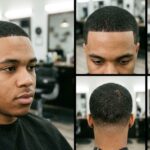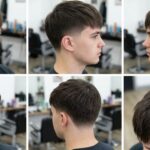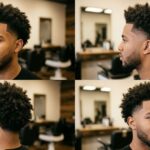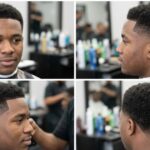
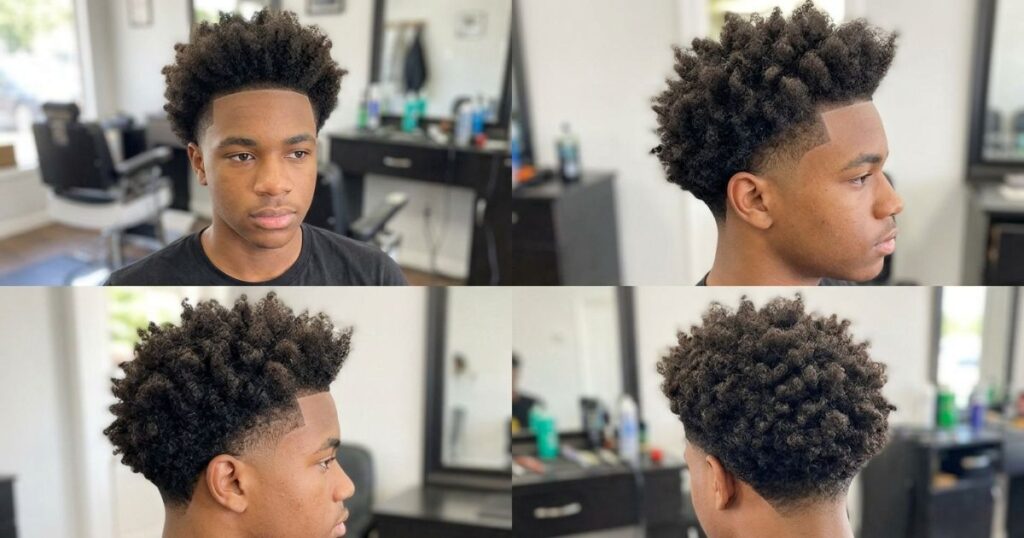
Blowout Low Taper Fade Curly Hair Cut the sides too close and your curls lose their shape; leave everything long and the style turns bulky. A blowout low taper fade for curly hair solves this by keeping volume on top and a soft, clean blend around the ears and neck.
This guide explains what the cut is, how it differs from skin fades and regular tapers, and which version suits your curl type and face shape. You will also get barber-ready wording, a simple home routine, and a realistic upkeep schedule, so the cut looks sharp long after you leave the chair.
What is a blowout low taper fade for curly hair?
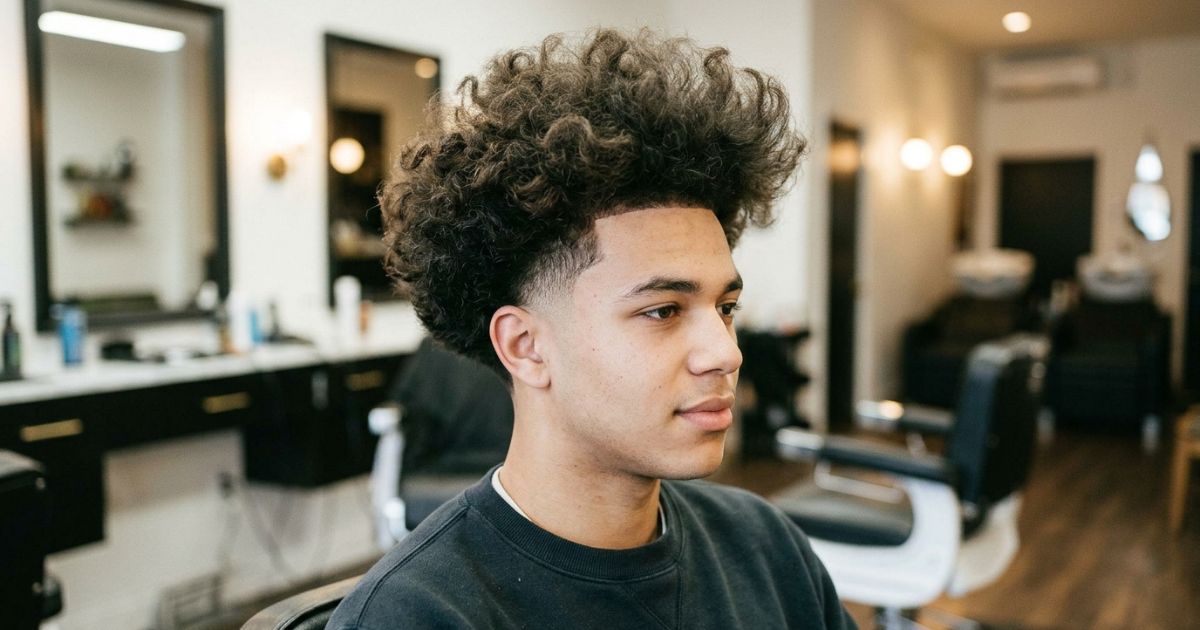
A blowout low taper fade is a haircut with a full, rounded curly top and sides that shorten gradually, starting low near the ears and nape. The “blowout” describes the shape and volume on top. The “low taper fade” describes how the sides blend.
The two terms cause confusion, so here they are separately:
- Blowout: a rounded, voluminous top. On a shop menu, it can also appear as a “blow fro” or “curly fro.”
- Low taper: a gradual fade that begins just above the ear and around the neckline.
- Combined: length and shape on top, tidy and subtle sides below.
Don’t confuse the cut with the blow-drying technique. Drying is how you style the cut at home, not the cut itself.
Blowout fade vs. skin fade vs. regular taper
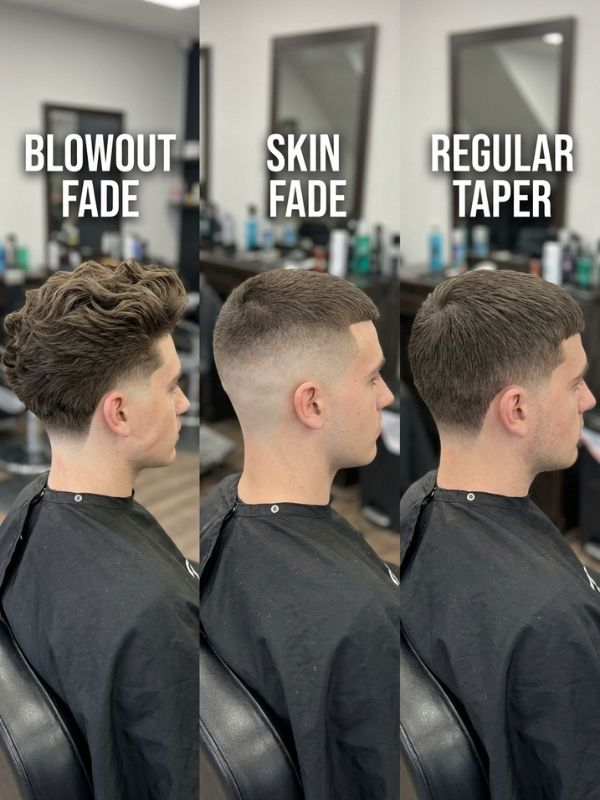
Barbers use these words loosely, so it helps to see them side by side.
| Feature | Blowout low taper fade | Skin fade | Regular taper |
| Sides | Blend down to a short guard or skin, starting low | Blend all the way to bare skin | Slightly shorter, little blending |
| Contrast | Soft | High | Very low |
| Top | Rounded, voluminous curls | Any length | Any length, usually less shaped |
| Upkeep | Fade refresh every 2–3 weeks | Every 2 weeks | Every 4–6 weeks |
| Best for | Curls that need volume and clean edges | Sharp, high-contrast looks | Low-effort, natural looks |
A skin fade can look harsh beside dense curls. A regular taper skips the sculpted shape. The blowout low taper sits in the middle.
Why it works so well with curly hair
Curls need length to show their pattern. Cut a 3C or 4A coil too short and it reads as stubble instead of a defined curl. The blowout leaves enough length for the hair to coil, loop or wave as it should.
The low taper removes bulk where curly hair tends to get unruly: the sides, the nape and the area around the ears. That keeps the head from turning triangular as the hair grows out.
Other reasons it works:
- Low-contrast blending: a low fade avoids an abrupt line under thick curls.
- Easier styling: short sides mean you only style the top.
- Flexible length: it works on tight coils and loose waves alike.
- Polished look: it stays neat enough for work.
How curl pattern affects fade placement
Tighter curls shrink more, so barbers adjust the blend. Use the table below as a starting point, not a rule.
| Curl type | Typical fade placement | Barber note |
| 2A–2C (waves) | Low, very soft blend | Keep the top long enough for the wave to move |
| 3A–3B (loose to springy curls) | Low to mid-low | Cut dry to see true curl length |
| 3C–4A (tight curls) | Low, with a slightly longer blend zone | Check length stretched and dry |
| 4B–4C (coily) | Low, with a gradual blend | Plan for heavy shrinkage |
Best styles for different curl types
The same cut looks different depending on how your hair curls. Here is how to adjust it.
Loose waves and curls (type 2A–3A)

Waves already look full, so the goal is shape, not height. Ask for a slightly longer front that can sweep forward or sit as a soft fringe. Keep the fade subtle so it doesn’t compete with the movement on top.
This version works well if you want a relaxed, office-friendly look. It also dries quickly and needs little product.
Defined curls (type 3B–3C)
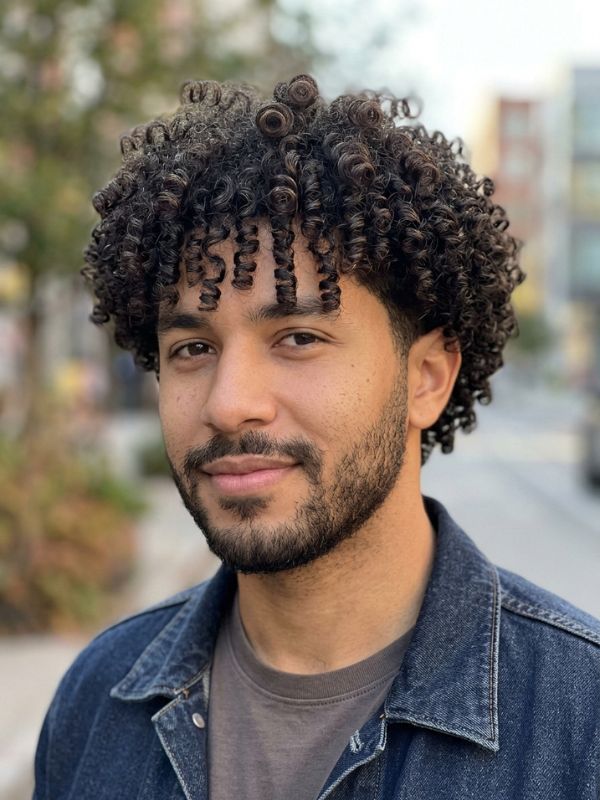
This is where a classic rounded blowout shines. Springy curls hold shape well, so your barber can sculpt a soft dome or a slightly boxy top. A low fade and a clean neckline keep the outline crisp.
Some people add a hard part above the temple. It’s a separate request, so mention it before the cut starts.
Coily and kinky hair (type 4A–4C)

Tight coils shrink a lot as they dry, sometimes by half their stretched length. Many barbers check length with the hair stretched or picked out before they cut. They may also leave a slightly longer blend zone so the fade doesn’t look sudden.
Common finishing touches include:
- A sharp edge-up or lineup at the hairline.
- A clean neckline.
- A rounded or lightly shaped crown.
| Curl type | Top style | Fade style | Main goal |
| 2A–3A | Soft, textured fringe | Very subtle low taper | Natural movement |
| 3B–3C | Rounded dome or soft box | Low taper, optional hard part | Definition and shape |
| 4A–4C | Full, picked-out shape | Low taper with longer blend zone | Volume with clean edges |
How to ask your barber for it
Barbers hear “fade” and “blowout” used many ways, so name each part. Say it plainly:
“Blowout on top, low taper fade on the sides and back. Please keep it low, not a skin fade.”
Then add these details:
- Your curl type: “Tight curls that shrink a lot” tells them more than a number.
- Guard or length: for example, “a #2 at the shortest point” (about ¼ inch).
- Top length: how many inches you want after the curls dry.
- Tools: ask for shears on the top if your curls are loose, since repeated clipper passes can leave them uneven.
- Extras: a lineup, hard part or beard blend.
- A reference photo: the quickest way to align expectations.
It also helps to choose a barber who already cuts curls. Check their social media or portfolio for similar work.
Read More:10 Trendy Hairstyles for Men to Try This Season
Choosing the right version for your face shape
Fade height matters less here than the shape and height of the top. Use the table to guide the conversation with your barber.
| Face shape | What to aim for | What to avoid |
| Round | A taller crown that adds length | Extra width at the sides |
| Square | A slightly rounded top to soften the jaw | A very boxy top |
| Oval | Almost anything | Nothing in particular |
| Diamond | More fullness at the forehead and jaw | Tall, narrow tops that emphasise the cheekbones |
| Heart | A softer top with balanced width | Too much height up front |
| Oblong | Moderate height with more width on the sides | A very tall crown |
If you’re unsure of your face shape, ask your barber to assess it before they start cutting.
How to style it at home
A short routine is enough. Do this after a wash:
- Cleanse gently. Use a sulfate-free shampoo or co-wash.
- Condition and detangle. Work from the ends upward with a wide-tooth comb while the hair is wet.
- Apply leave-in. Distribute through damp curls.
- Add curl cream. Focus on the crown for definition.
- Diffuse. Use low to medium heat and lift the roots as you dry.
- Shape. Once mostly dry, pick or fluff the crown into a round shape, then leave it alone.
Touching curls repeatedly while they dry is a common cause of frizz.
Products, by the job they do
You don’t need a full shelf. Pick products by the job they do.
| Job | Product type | Tip |
| Volume at the roots | Mousse or root-lift spray | Apply to damp hair before diffusing |
| Definition | Curl cream or custard | Richer formulas suit tighter coils |
| Moisture and frizz control | Leave-in conditioner | Use a small amount on dry-prone hair |
| Shine and flyaways | Light oil (argan, jojoba) | A few drops on the surface only |
| Overnight protection | Satin pillowcase or bonnet | Reduces friction and moisture loss |
Heavy products near the scalp can weigh curls down and flatten the shape.
Keeping the fade sharp and curls fresh
The fade and the top age at different speeds. Hair grows roughly half an inch a month, and the short areas around the ears and nape look untidy first.
| Task | How often | Why |
| Fade and neckline refresh | Every 2–3 weeks | Keeps the blend clean |
| Top trim | Every 6–8 weeks | Preserves length and shape |
| Clarifying wash | Once every 1–2 weeks | Removes product buildup |
| Leave-in refresh | Mid-week, as needed | Revives definition |
| Satin pillowcase or bonnet | Nightly | Cuts frizz and moisture loss |
Extra tips:
- Book the next appointment before you leave the shop.
- Rinse sweat from the hairline after workouts.
- In humid weather, use a firmer-hold curl cream.
- Avoid daily layering of heavy products without washing.
How it compares: low fade, mid taper, and burst fade
| Style | Where the blend starts | Contrast | Works best with |
| Blowout low taper fade | Just above the ears and nape | Soft | Full curly tops |
| Low fade (alone) | Low on the sides and back | Soft | Any top length |
| Mid taper | Around mid-side of the head | Medium | Shorter curls, defined shapes |
| Burst fade | A curved arc around the ear | Localised, high | Fringes and mohawk-style tops |
The low fade is usually the safest choice for dense curls. A mid taper adds more contrast, and a burst fade puts the focus around the ear rather than the whole head.
Frequently asked questions
Does a blowout low taper fade work on tight, coily hair?
Yes. The low blend avoids harsh contrast against dense curls, and many barbers cut coily hair stretched to judge the true length.
How often should I get the fade touched up?
Every two to three weeks usually keeps it tidy. The top can go six to eight weeks between trims.
Is a blowout the same as blow-drying?
No. A blowout is the haircut shape, while blow-drying is the drying technique you use to style it.
Will diffusing damage my curls?
Low to medium heat with leave-in conditioner keeps damage minimal. Frequent high heat with no protection is what dries curls out.
Can I get this cut with fine or wavy hair?
Yes. Ask for a softer, less rounded top and a very subtle fade.
How long should my hair be before I ask for it?
About 3 to 4 inches on top gives your barber enough to shape. Tighter curls may need a little more because of shrinkage.
Is it office-appropriate?
Usually, yes. The low fade is subtle, so the cut looks neat while your natural curls remain visible.
Conclusion
The blowout low taper fade works because it respects curly hair. You keep the length and shape that show off your pattern, while the sides stay clean and quiet. It suits most curl types, from loose waves to tight coils, when the barber adjusts the blend and top shape properly.
Before your next appointment, bring a reference photo, name the blowout and the low taper separately, and plan fade refreshes every two to three weeks. Add a gentle home routine and a satin bonnet at night. Do that consistently, and the cut will look intentional every day.