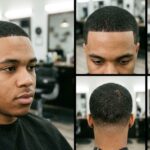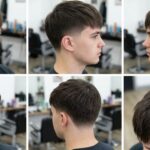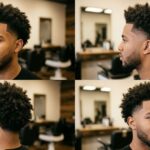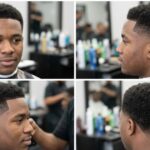
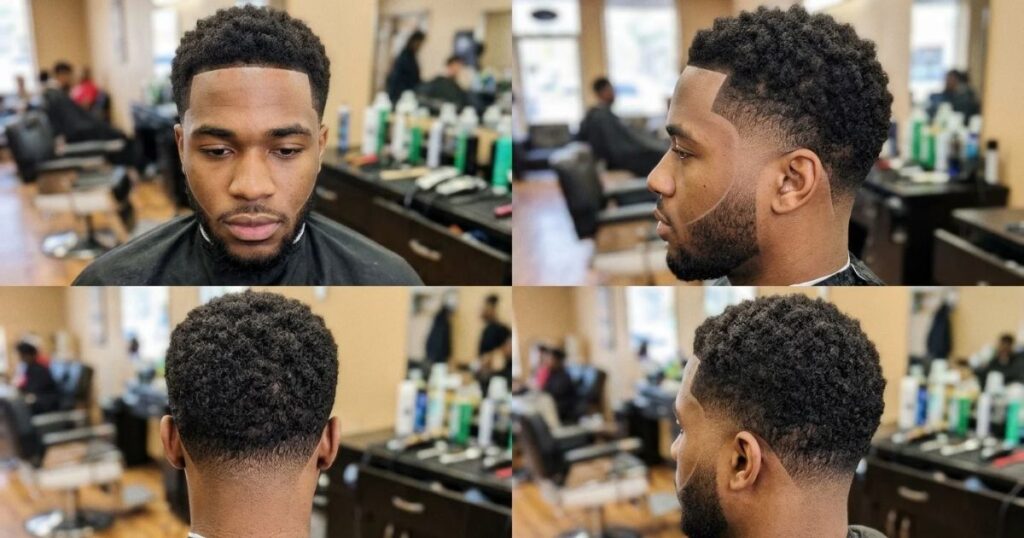
The low mid taper fade is the haircut barbers keep recommending to men who want a neat look without a high-maintenance routine. It blends the sides gradually from the mid-temple down, leaving the top free for whatever style you like. This guide covers who it suits and what to say in the chair.
Part of its appeal is flexibility. The fade starts higher than a low taper but stays softer than a full mid fade, so it looks sharp without shouting. It grows out well, works on most hair types, and suits offices, gyms, and weekends equally. It is a safe first fade.
What a low mid taper fade actually is
Quick answer: A low mid taper fade is a men’s haircut where the sides blend from short to shorter, starting around the mid-temple and finishing tight at the sideburns and neckline. The top stays longer, and the blend has no harsh lines.
The word “taper” means the hair shortens gradually instead of dropping off in one step. Barbers build that gradient with clipper guards in decreasing sizes, then refine it with a clipper-over-comb pass or a trimmer at the edges.
Here is the cut broken into zones:
| Zone | What happens |
| Top | Left long enough to style (crop, quiff, fringe, part) |
| Temple and sides | Blend begins around the mid-temple and shortens toward the ear |
| Sideburns | Finished tight and clean |
| Neckline (nape) | Tapered short for a groomed edge |
Barber tip: Because the blend is gradual, a low mid taper fade forgives a few extra days of growth better than a skin fade does.
Low taper vs mid taper vs low mid
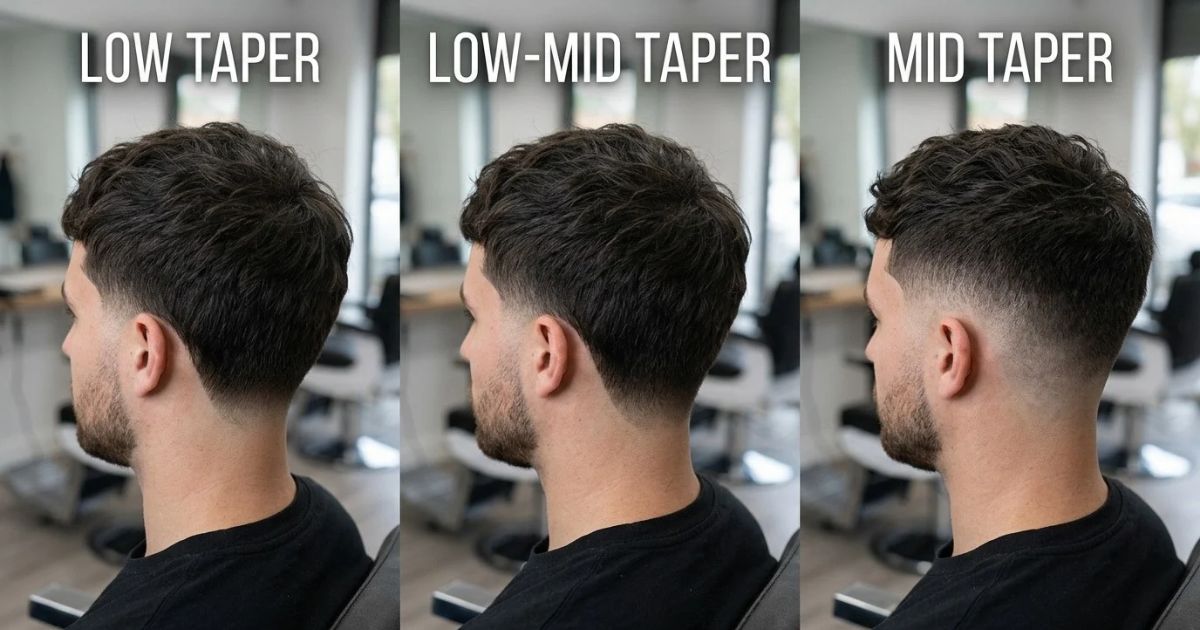
The difference is where the fade starts on the side of your head. Heads vary, so think of these as zones, not exact measurements.
| Feature | Low taper | Low mid taper | Mid taper |
| Where the blend starts | Just above the ear, along the natural hairline | Around the mid-temple | Higher, near the temple and up toward the eye line |
| Contrast with the top | Subtle | Moderate | Noticeable |
| Overall mood | Quiet and classic | Balanced and modern | Sharp and deliberate |
| Best for | Conservative workplaces | Most men, first-time fade clients | Men wanting a stronger outline |
| Typical trim cycle | 3-4 weeks | 2-4 weeks | 2-3 weeks |
A low taper leaves most of the side hair untouched. A mid taper takes more of it away and creates a clearer line between top and sides. The low mid version sits between them, so you get shape without looking like you changed your whole personality.
Read More:Taper Low Burst Fade: Styles, Barber Tips, and a Complete Guide
Why it’s everywhere in 2026
Three things keep this cut in heavy rotation.
- It pairs with almost any top. Switch from a textured crop to curls or a buzz without redoing the sides.
- It grows out gracefully. No single hard line gives away a week of regrowth.
- It fits the lived-in trend. Matte, natural finishes have replaced glossy, slicked-back styling, and a soft blend suits that look.
It is also standard barbering, so most shops can cut it well. You do not need a specialist, just a clear request.
Best low mid taper fade styles
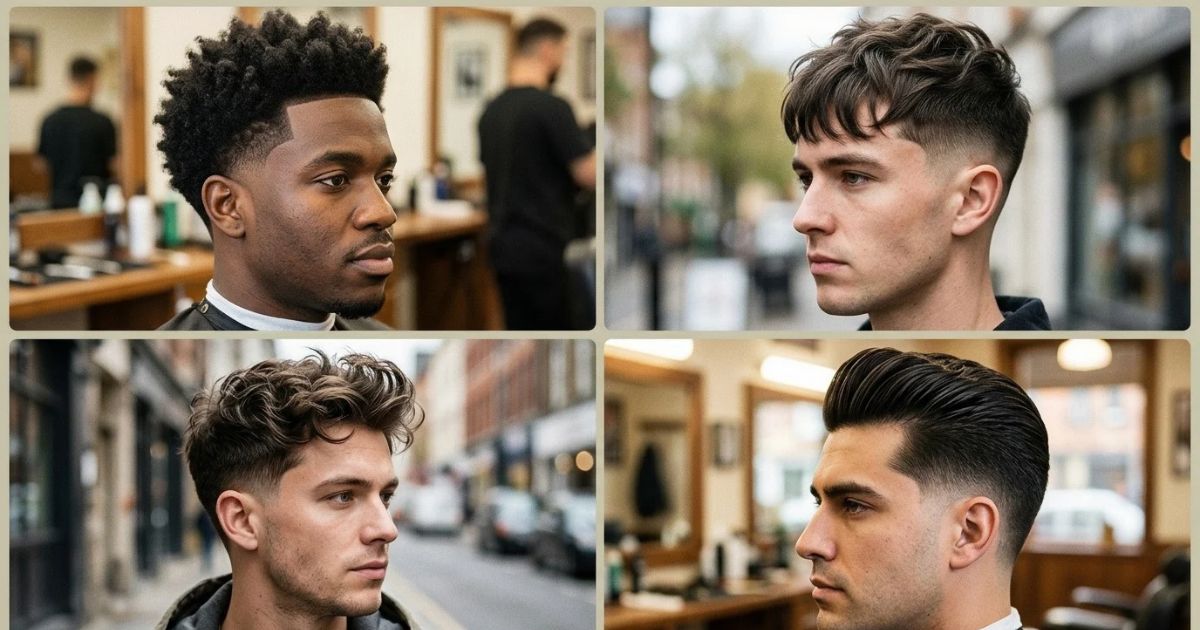
The fade stays the same. The top changes the personality.
| Top style | Typical top length | Best for | Go-to product |
| Textured crop | 1-3 inches | Straight to wavy hair | Matte clay |
| Quiff | 3-4 inches at the front | Medium to thick hair | Light-hold pomade or paste |
| Forward fringe | 2-4 inches | Straight, fine, or wavy hair | Sea salt spray or light cream |
| Side part | 2-4 inches | Office and formal settings | Water-based pomade |
| Buzz on top | Under 1 inch | Any texture, minimal routine | None needed |
| Curly top | 2-5 inches | Curly and coily hair | Curl cream or leave-in |
Textured crop
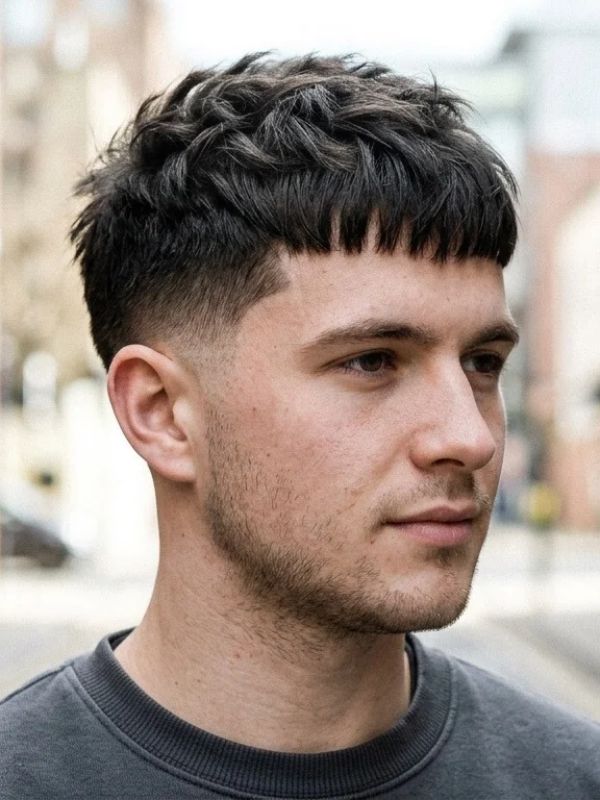
The most requested pairing. The top is cut with texture, pushed forward, and left slightly messy. It takes under two minutes to style.
Quiff
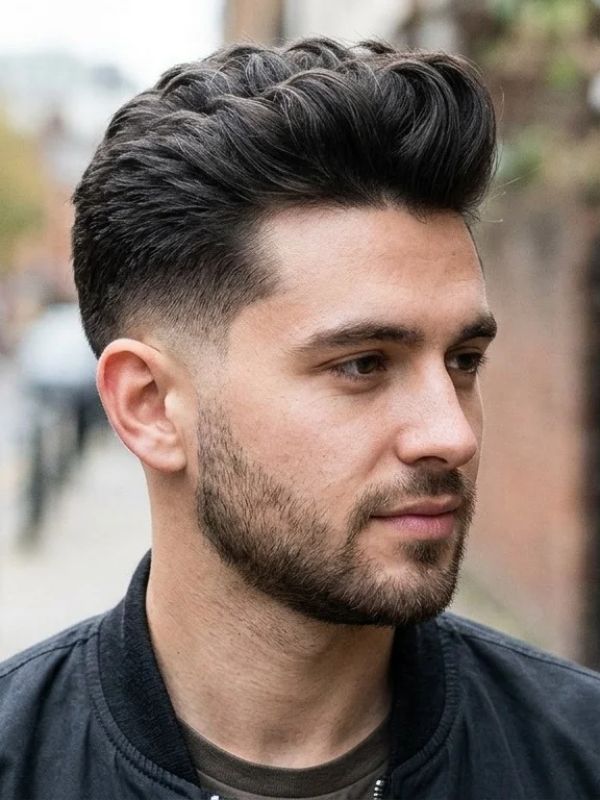
Height at the front creates strong contrast with the short sides. Blow-dry upward, then set with a small amount of paste.
Forward fringe
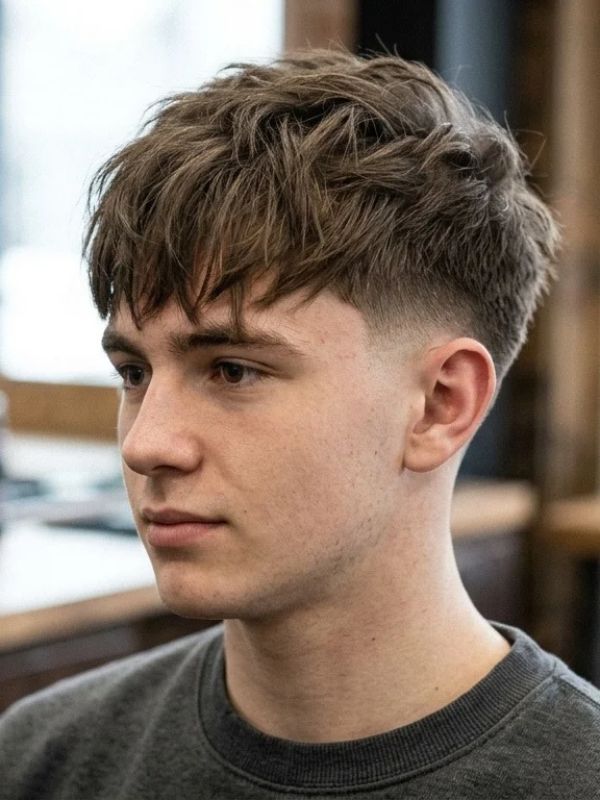
Softer than a quiff. The fade stops the sides from looking bulky around the ears.
Side part
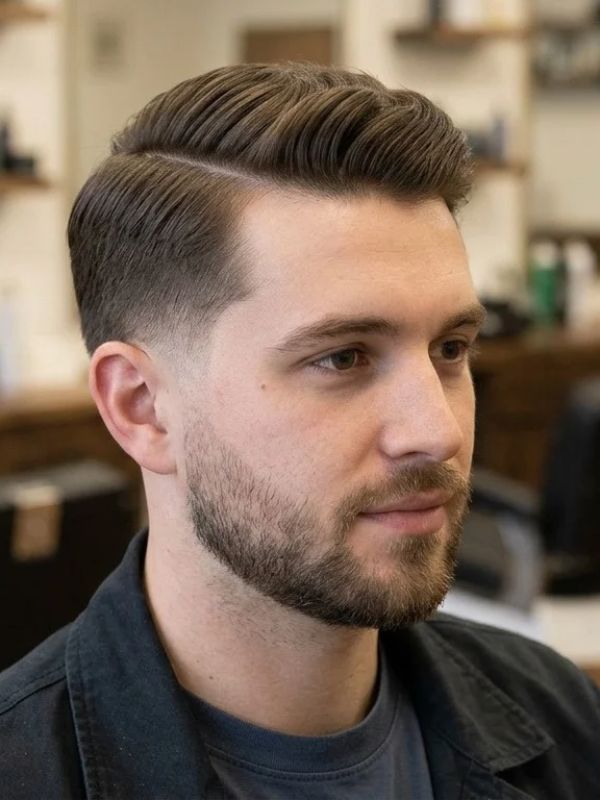
Comb it clean for a polished finish. Ask for a razor-defined part if you want it sharper.
Matching the cut to your hair type
Texture changes how the barber cuts the blend and how it looks afterward.
| Hair type | How the fade looks | What to tell your barber | Styling note |
| Straight | Crisp, very visible gradient | Keep some length on top if hair is fine | Use light texture products to add body |
| Wavy | Movement on top contrasts with clean sides | Leave a little extra length, since waves shrink as they dry | Air dry or diffuse |
| Curly | Tight sides frame full curls | Keep curl length intact; blend the sides naturally | Moisturize to avoid frizz blurring the line |
| Thick | Fade removes bulk gradually | Ask for thinning on top with shears | Rough-dry, then style |
| Coily | Sharp contrast and strong shape | Ask for a clean neckline and natural hairline | Keep hair hydrated and shaped |
Experience note: If your hair spikes out right above the ears, mention it. Cowlicks and growth patterns can change where a barber starts the blend.
Which face shapes it suits
This cut flatters most faces. The top is what you adjust.
| Face shape | What works on top | What to avoid |
| Oval | Almost anything | Nothing in particular |
| Round | Height: quiff or upswept crop | Flat, wide tops |
| Square | Textured crop, forward fringe | Overly boxy, flat styles |
| Diamond | Some width on top, like a fringe or side part | Very tight sides near the cheekbones |
| Long | Shorter, flatter top | Tall quiffs that add more length |
These are starting points. A good barber reads your head shape and adjusts as they cut.
How to ask your barber for it
Most bad haircuts come from vague requests. “Just clean it up” means something different to every barber.
Try this script:
“I’d like a low-to-mid taper on the sides and neckline, blended naturally, with the top left at [your length].”
Then add details:
- Where the fade starts: around the mid-temple, not higher.
- How short it finishes: natural taper or skin-close near the sideburns.
- Your neckline: rounded, squared, or natural.
- Your part: hard part, soft part, or none.
- Your beard (if any): ask for the fade to connect into the beard line.
Pro tip: Bring a photo, ideally showing the side and back. It beats any description. Clipper guard numbers help too: a #1 leaves about 1/8 inch, a #2 about 1/4 inch, and a #3 about 3/8 inch.
Styling it at home
Your barber handles the fade. You only manage the top. Use less product than you think you need, about a thumbnail-sized amount, and build up if required.
Basic routine:
- Towel-dry your hair until slightly damp.
- Apply your product to your palms and warm it up.
- Work it through from back to front.
- Shape with your fingers or a comb.
- Blow-dry on medium heat if you want extra lift.
| Look | Product | Finish |
| Messy crop | Matte clay | Natural, no shine |
| Quiff | Paste or light pomade | Medium hold, soft sheen |
| Side part | Water-based pomade | Neat, polished |
| Curls | Curl cream or leave-in | Defined and soft |
| Fine or flat hair | Sea salt spray | Volume and grip |
Avoid heavy gels on this cut. They make the top look stiff against the soft blend.
How often to get it trimmed
A fade looks sharpest in the first week or so. After that, the blend softens as hair grows in.
| Trim schedule | Result |
| Every 2 weeks | Razor sharp, crisp neckline |
| Every 3 weeks | Clean and fresh, the sweet spot for most men |
| Every 4 weeks | Softer blend, still neat |
| 5+ weeks | Grown-out taper; the shape starts to drift |
Fast-growing hair needs shorter gaps. Ask about a quick neckline and sideburn cleanup between full cuts. Many barbershops offer one at a lower price.
Mistakes worth avoiding
- Going too short too quickly. You can always cut shorter next time. You cannot put hair back.
- Ignoring the neckline. The back is what people see walking away. Say how tight you want it.
- Leaving the start point vague. “Whatever you think” can land you with a high fade when you wanted a low mid.
- Using too much product. It weighs the top down and clashes with the soft blend.
- Skipping the photo. Words get misread. Pictures do not.
- Stretching the schedule too far. Waiting six weeks turns a fade into a shapeless trim.
The short version
The low mid taper fade earns its place because it balances polish and practicality. It gives you clean sides, a tidy neckline, and total freedom on top. Whether you choose a crop, quiff, fringe, or buzz, the fade quietly does the heavy lifting underneath. Style takes only minutes each morning.
Before booking, decide where the fade should start, save a reference photo, and plan a trim every two to four weeks. Choose a top that suits your hair texture and face shape. Do that, and you will leave the chair with a cut that looks intentional all month.
Go deeper: low taper fade guides
Explore these related topics next:
- Low taper fade haircuts: the full overview
- Low taper vs low fade: which one to choose
- Mid taper fade: styles and barber wording
- Low taper fade for straight hair
- Low taper fade with a beard
- Drop fade vs taper fade
- Skin fade vs taper fade
- How to cut a fade at home
FAQs about the low mid taper fade
What is a low mid taper fade?
It is a men’s cut that blends the sides from the mid-temple down to a tight neckline. It sits between a low taper and a mid taper.
How do I ask my barber for a low mid taper fade?
Say “low-to-mid taper, natural blend, top left at [length],” and show a photo. Mention how tight you want the neckline.
How often should I get it trimmed?
Every two to three weeks keeps it sharp. Four weeks works if you accept a softer blend.
Is a low mid taper fade the same as a skin fade?
No. A taper keeps some length at the edges, while a skin fade goes down to bare skin.
Does it work for curly hair?
Yes. The short sides frame curls cleanly and keep the shape defined.
Which face shape suits it best?
Oval faces have the most freedom, but it works on most shapes with the right top.
Is it a good first fade?
Yes. It gives visible shape without the contrast of a high or skin fade.
Can I wear it to a professional workplace?
Yes. Paired with a side part or short crop, it looks neat in formal settings.