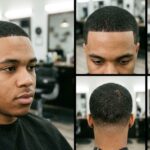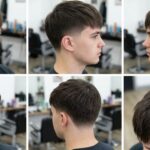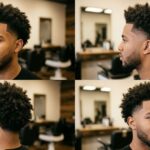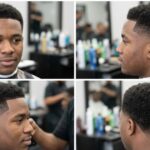
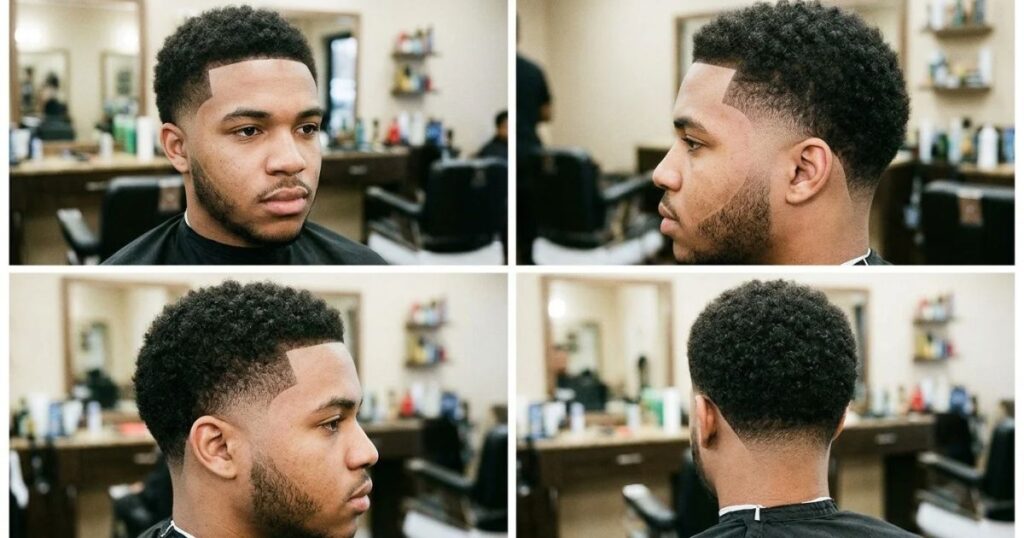
The low mid taper fade is one of the most requested men’s haircuts right now, and for good reason. It looks sharp, grows out gently, and works with almost any top style. If you want a clean cut without constant upkeep, this fade deserves a spot on your shortlist.
This guide explains what the cut is, how it differs from low and mid tapers, and which styles suit your hair type and face shape. You will also get barber wording, home styling tips, a trim schedule, and common mistakes to avoid, so you can walk in confident.
What a low mid taper fade actually is
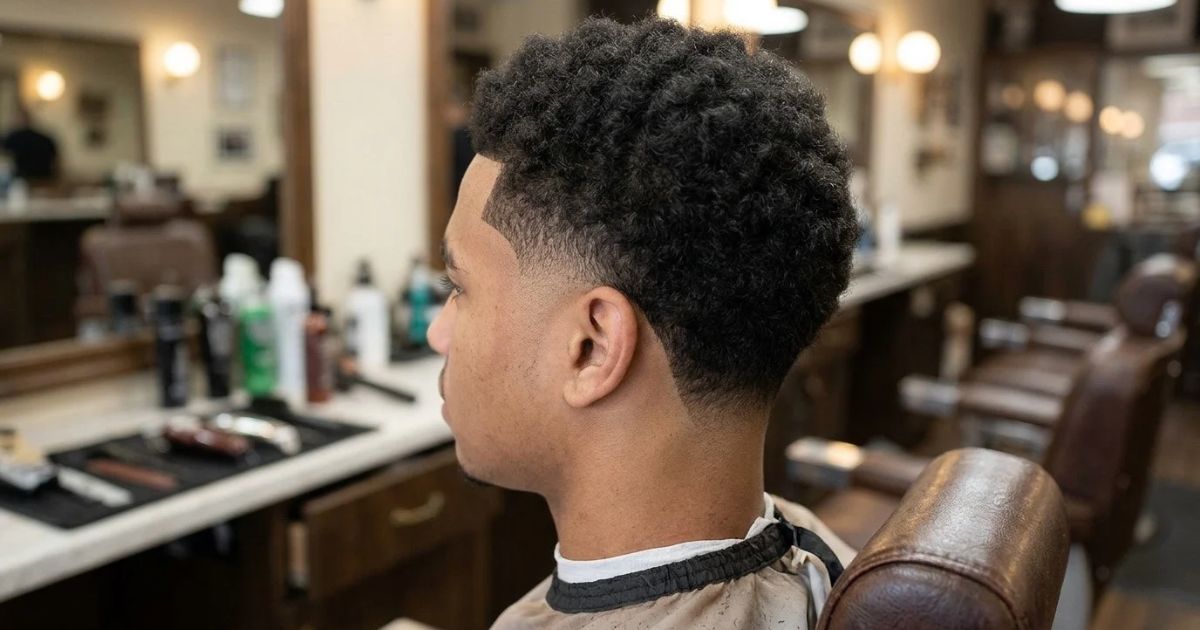
A low mid taper fade is a men’s haircut where the sides and back shorten gradually, starting roughly between the ear and the temple. The blend finishes tight at the sideburns and neckline. The top keeps its length, so the contrast stays soft rather than dramatic.
Think of it as a gradient with no visible line. A barber moves through clipper guards in smaller and smaller sizes, then uses a blending technique (often called “scissor over comb” or clipper-over-comb) to erase any steps between lengths.
Anatomy of the cut
| Zone | What happens here |
| Top | Left longer, anywhere from a short crop to a full quiff |
| Mid-temple | The blend begins here, slightly above a classic low fade |
| Around the ear | Length steps down through progressively shorter guards |
| Sideburns | Finished tight and clean |
| Neckline | Tapered (natural) or blocked (squared), depending on preference |
Typical guard progression
Every barber blends a little differently, so treat this as a general guide rather than a rule.
| Guard | Approx. length | Usual placement |
| No guard / foil shaver | 0 mm | Only for a skin-close finish at the edge |
| #1 | 3 mm (1/8 in) | Lowest part of the fade, near the ear and nape |
| #2 | 6 mm (1/4 in) | Lower-middle section |
| #3 | 10 mm (3/8 in) | Upper-middle section |
| #4 | 13 mm (1/2 in) | Top of the fade, where it meets the longer hair |
Read More:Low Taper Fade Haircut for Straight Hair: Complete Style Guide for 2026
Low taper vs mid taper vs low mid
The words “low” and “mid” describe where the fade starts on the side of your head. That one decision changes how bold the haircut looks.
| Feature | Low taper | Low mid taper | Mid taper |
| Where the fade starts | Just above the ear, along the natural hairline | Between the ear and temple | Around the temple |
| Contrast with the top | Subtle | Moderate | Noticeable |
| Skin shown | Very little | A little | More |
| Grow-out | Easiest | Easy | Moderate |
| Best for | Office settings, first-timers | A balanced, everyday look | A sharper, more styled finish |
Taper vs fade: a quick note
A taper usually leaves a bit of length at the edges, while a fade can go down to bare skin. A low mid taper fade sits in the middle: neat and tight, but not bald.
How to choose
- Pick a low taper if you want the quietest option.
- Pick a mid taper if you want clear shape and contrast.
- Pick a low mid if you want something in between and aren’t sure yet.
Why it’s everywhere in 2026
This haircut keeps showing up in barber booking lists and style roundups because it solves several problems at once.
- It works with many tops. Crops, curls, waves, buzz cuts, and side parts all sit well above it.
- It looks fine between visits. With no harsh line, early grow-out reads as natural.
- It’s easy to explain. Most barbers already know the technique, so you don’t need a specialist.
- It looks good in photos. A smooth blend shows clearly in reference pictures, which makes it easy to request.
- It matches current tastes. Matte, textured, lived-in styling has replaced the shiny slick-back, and this fade supports that relaxed look.
Best low mid taper fade styles
The fade stays the same. The top changes the personality of the haircut.
Textured crop
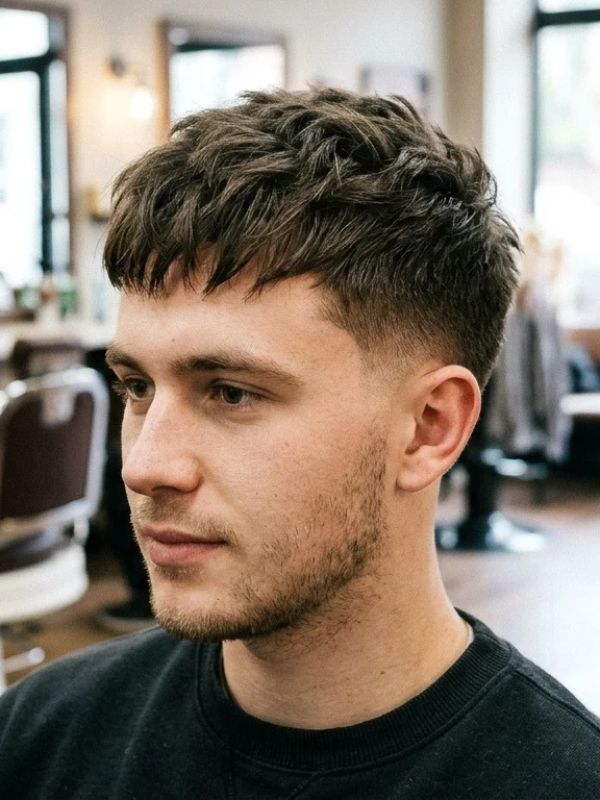
Short to medium length on top, cut with texture and pushed forward. It is quick to style and suits most people.
Quiff
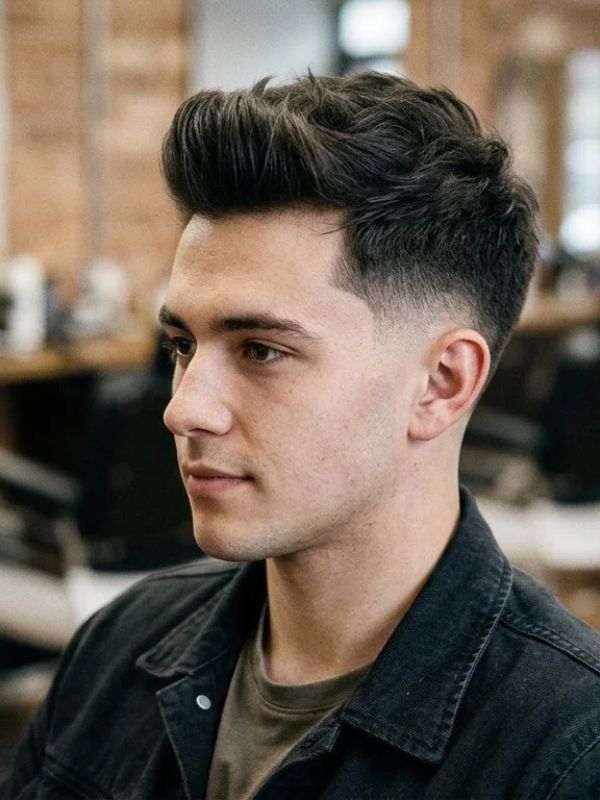
Extra height at the front, swept up and slightly back. The fade gives the volume a clean frame.
Forward fringe
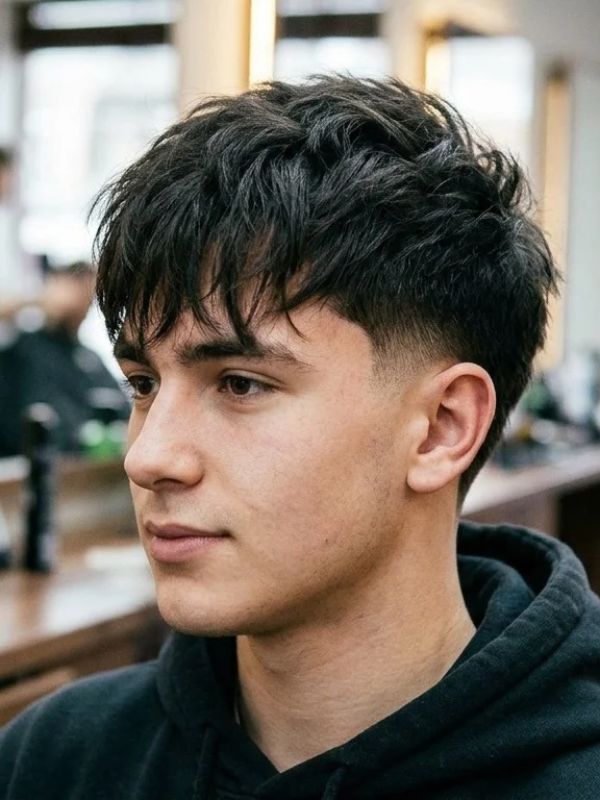
The top falls toward the forehead. It looks softer and works well on straight or lightly wavy hair.
Side part
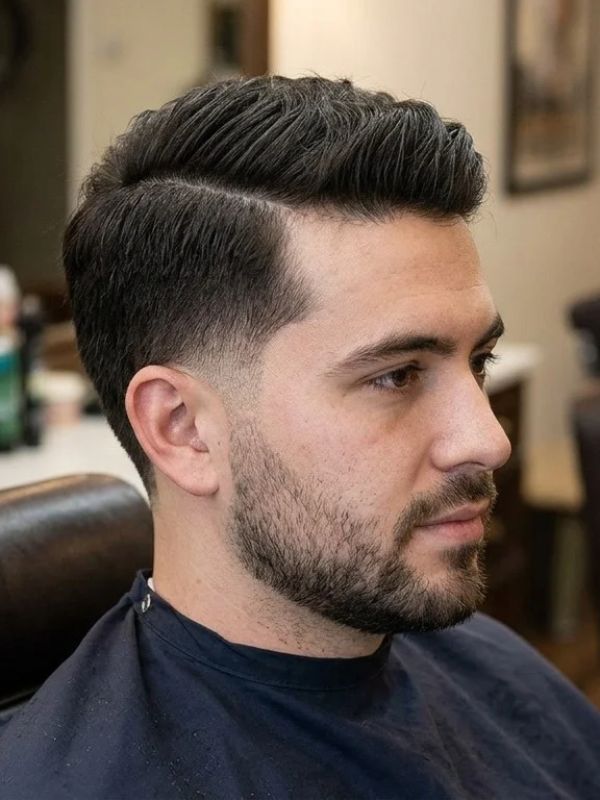
A combed, defined parting for a polished finish. Ask for a hard part if you want a crisp line.
Buzz cut on top
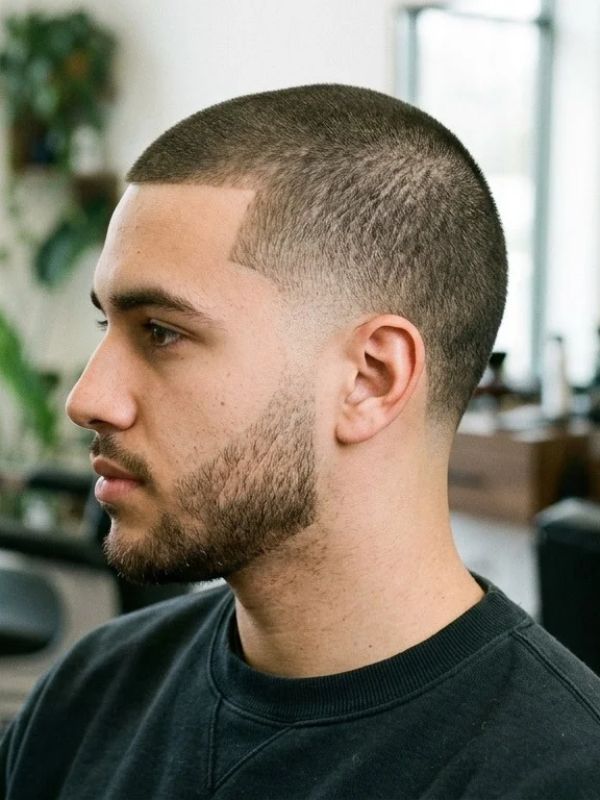
The simplest version. It needs almost no styling and grows out evenly.
Curls or waves on top
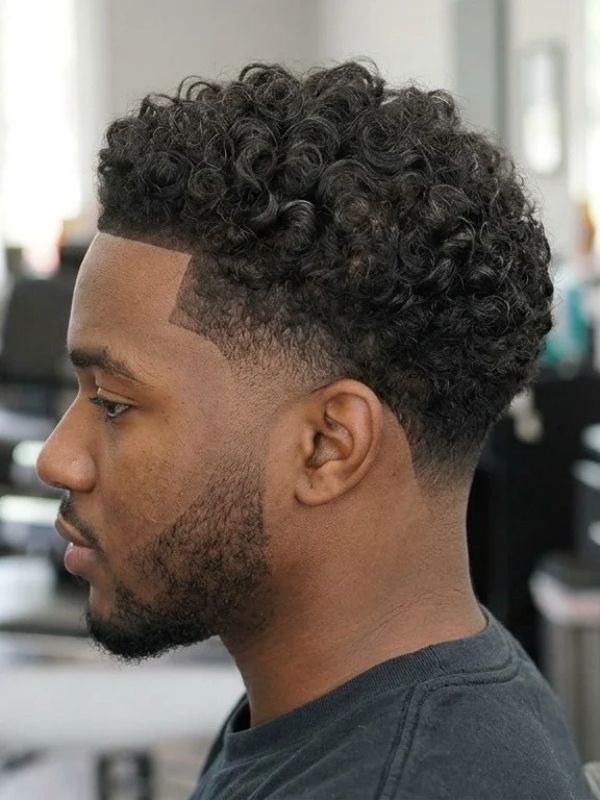
Natural texture on top against tidy sides creates strong, clean contrast.
Slick back
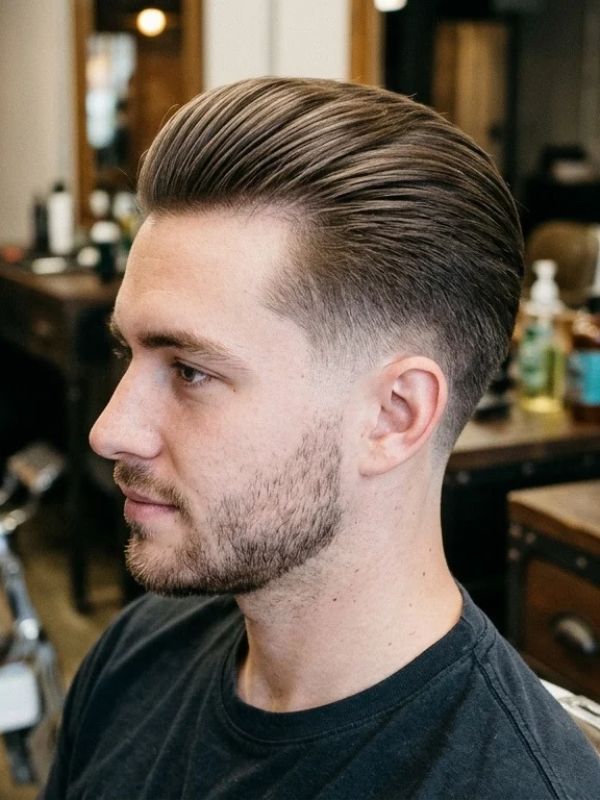
Longer hair combed back, with a matte or low-shine finish for a modern take on a classic.
| Top style | Length on top | Effort | Best hair type |
| Textured crop | 1–3 in | Low | Straight, wavy, thick |
| Quiff | 3–4 in | Medium | Straight, thick, wavy |
| Forward fringe | 2–4 in | Low | Straight, fine |
| Side part | 2–4 in | Medium | Straight, wavy |
| Buzz | Under 1 in | Very low | All types |
| Curls or waves | 2–5 in | Medium | Curly, wavy |
| Slick back | 4+ in | Medium–high | Straight, thick, wavy |
Matching the cut to your hair type
Hair texture changes how the blend looks and how you should style the top.
| Hair type | What it does with this fade | What to ask for | Product tip |
| Straight | Shows the gradient very clearly | Keep some length if hair is fine, so it doesn’t look thin | Light clay or paste |
| Wavy | Adds movement against the clean sides | Leave a little extra length, since waves spring up as they dry | Sea salt spray or cream |
| Curly | Defined sides frame the curls well | Keep the curl pattern intact on top, with a clean fade underneath | Curl cream or leave-in |
| Thick | Holds shape but can feel heavy | Ask the barber to remove weight with thinning shears | Styling cream, blow-dry |
| Fine or thinning | Easy to over-cut | Keep the fade softer and the top longer | Volumizing powder |
| Coily | Creates a sharp, structured outline | Ask for a clean neckline and a shaped crown | Moisturizing cream, oil for shine |
Which face shapes it suits
Most face shapes can wear it. The top style does the balancing work.
| Face shape | What helps | What to skip |
| Oval | Almost anything | Nothing in particular |
| Round | Height on top, tighter sides | Very flat tops |
| Square | Textured crop or soft fringe | Overly blocky shapes |
| Diamond | Some width at the forehead, such as a fringe | Very tight sides |
| Long | Shorter, flatter top with fuller sides | Tall quiffs |
| Heart | Medium length, side-swept fringe | Heavy volume at the top |
These are starting points, not strict rules. Your head shape, hairline, and cowlicks matter too, so let your barber adjust.
How to ask your barber for it
Most haircut disappointments come from vague requests. A clear request takes thirty seconds and saves weeks of regret.
- Name the cut. Say “low-to-mid taper fade.”
- Say where it starts. Point to the area between ear and temple.
- State the finish. Ask for a natural blend, or a tighter skin-close finish at the edges.
- Give the top length. Use inches or show your fingers.
- Mention the neckline. Tapered, rounded, or blocked.
- Show a photo. It beats any description.
“I’d like a low-to-mid taper on the sides and back, blended naturally, starting around the temple, with about two inches left on top.”
Barber words worth knowing
| Term | Meaning |
| Blend | The smooth transition between lengths |
| Guard | The clipper attachment that sets the cut length |
| Taper | Gradual shortening, usually leaving some length at the edge |
| Fade | Shortening that can reach bare skin |
| Line-up | Sharpened edges around the forehead and temples |
| Blocked neckline | A squared, straight finish at the nape |
| Tapered neckline | A natural, gradually shortening finish at the nape |
| Thinning shears | Scissors that remove bulk without shortening the length |
If you wear a beard, ask the barber to connect the sideburn into the beard line so there is no abrupt stop. Never say “just a trim” or “clean it up.” Those phrases mean different things to different barbers.
Styling it at home
The barber handles the fade. You handle the top, and a small amount of product goes a long way.
| Look | Product | How to do it |
| Textured crop | Matte clay | Rub a pea-sized amount between your palms, work it through slightly damp hair, and push forward |
| Quiff | Light pomade or styling cream | Blow-dry upward at the front, then add product to hold the lift |
| Side part | Water-based pomade | Comb through damp hair, then set with a quick blast of heat |
| Curls | Curl cream or leave-in | Apply to wet hair, scrunch, and air-dry or diffuse |
| Slick back | Matte paste | Comb back from damp hair and smooth the sides with your palms |
Simple daily routine
- Start with slightly damp hair, not soaking wet.
- Use less product than you think you need.
- Rough-dry with a hairdryer on medium heat if you need volume.
- Shape with your fingers, then comb only if you want a neat finish.
- Wash product out at night so your scalp stays clean.
How often to get it trimmed
A fade looks best in the first week or two. After that, the blend softens as hair grows in.
| Schedule | What you get |
| Every 2–3 weeks | Crisp blend, tidy neckline, sharpest look |
| Every 3–4 weeks | Softer blend, still neat on most hair types |
| Every 4–5 weeks | A relaxed, natural taper that looks less precise |
Fast-growing or dark, coarse hair shows grow-out sooner. Fine or light hair often hides it for longer. If full cuts every two weeks are too much, ask for a quick neckline and sideburn clean-up in between. Many shops offer this as a shorter, cheaper visit.
Mistakes worth avoiding
- Going too short, too fast. If you’re new to fades, start with a longer blend. You can always go shorter next time.
- Skipping the neckline conversation. A messy nape ruins an otherwise good cut.
- Leaving the fade height to chance. Say where it should start.
- Ignoring your hair texture. Straight, curly, and thick hair all need slightly different top lengths.
- Using heavy product. Too much gel or wax flattens the top and looks greasy against a clean fade.
- Stretching trims too long. A fade past five weeks usually needs a full reset, not a touch-up.
- Copying a photo without checking your hair type. A style on a different texture can look completely different on you.
The short version
The low mid taper fade earns its popularity by being practical. It gives you a clean, structured shape, pairs with nearly every top style, and forgives a missed appointment better than a high or skin fade. It suits most hair types and face shapes with small tweaks.
Before you book, decide your top style, name where the fade should start, and bring a reference photo. Then plan a trim every two to four weeks. Do that, and you will leave the chair with a cut that looks intentional on day one and still good on day twenty.
Go deeper: low taper fade guides
Want to explore related cuts? These are the natural next topics to read once you’ve settled on a direction:
- Low taper fade haircuts: the complete overview of the base cut
- Low taper vs low fade: how a taper and a fade differ at the same height
- Mid taper fade: styles and barber wording for a higher starting point
- Low drop fade: the low fade that curves down behind the ear
- Taper fade with a beard: blending hair into facial hair
- Low taper fade for curly hair: products and top styles for curls
- Low taper fade for straight hair: keeping fine hair full and styled
- Middle part with a low taper: a longer, center-parted top
FAQs about the low mid taper fade
What is a low mid taper fade?
It is a men’s haircut that blends from between the ear and temple down to a tight neckline and sideburns. It sits between a low taper and a mid taper.
How do I ask my barber for a low mid taper fade?
Say “low-to-mid taper, blended naturally,” give your top length, and show a reference photo.
How often should I get a low mid taper fade trimmed?
Every two to three weeks keeps it sharp, or three to four weeks for a softer look.
Is a low mid taper fade good for curly hair?
Yes. The tidy sides frame curls cleanly and keep the overall shape defined.
Which face shape suits a low mid taper fade best?
Oval faces suit it most easily, but round, square, diamond, and long faces work with the right top style.
What is the difference between a low taper and a mid taper fade?
A low taper starts just above the ear, while a mid taper starts near the temple for more contrast.
Is a low mid taper fade professional enough for work?
Yes. It is neat, understated, and widely accepted in office settings.
Can I get a low mid taper fade with a beard?
Yes. Ask your barber to blend the sideburns into your beard so the transition looks seamless.